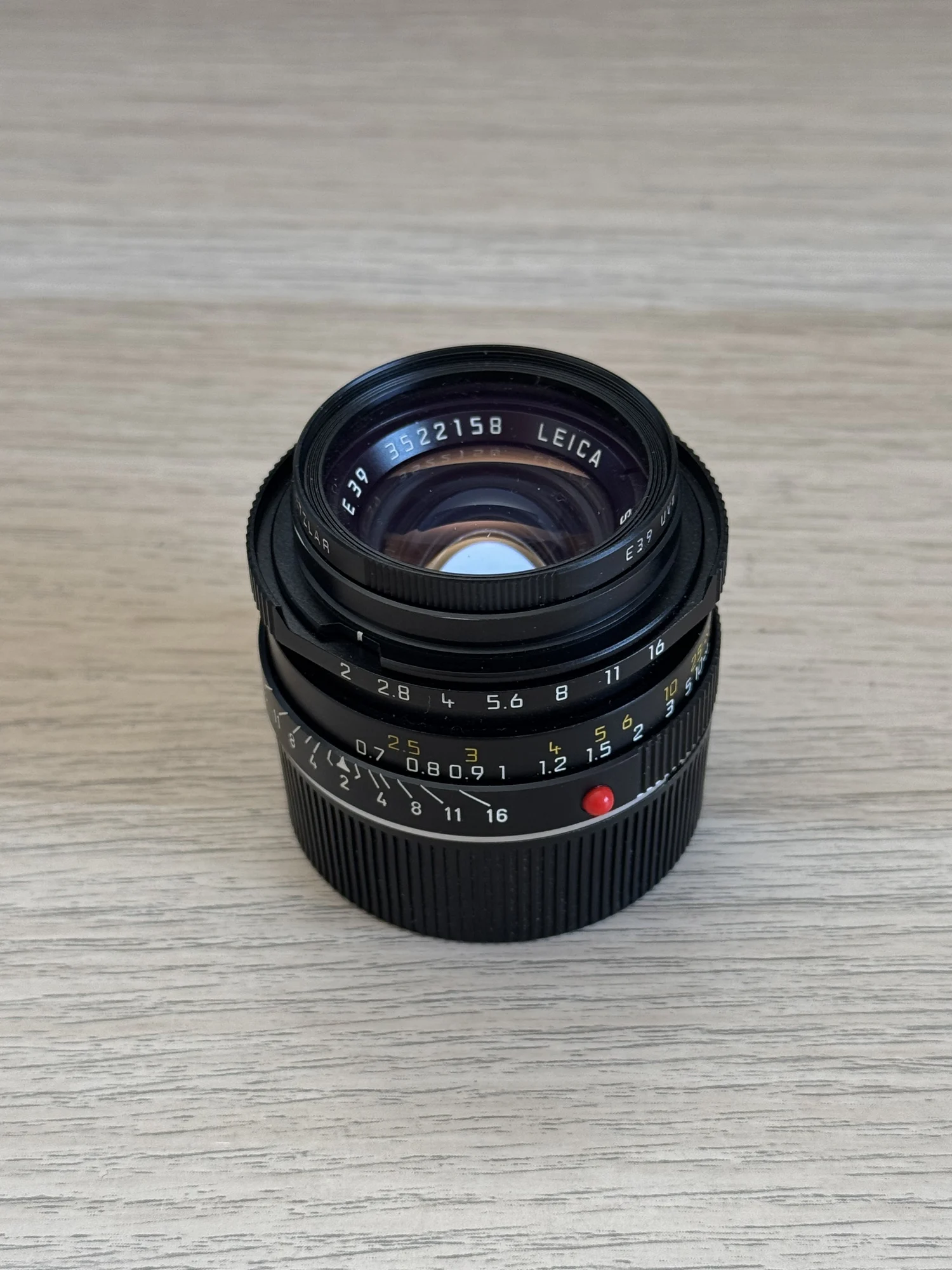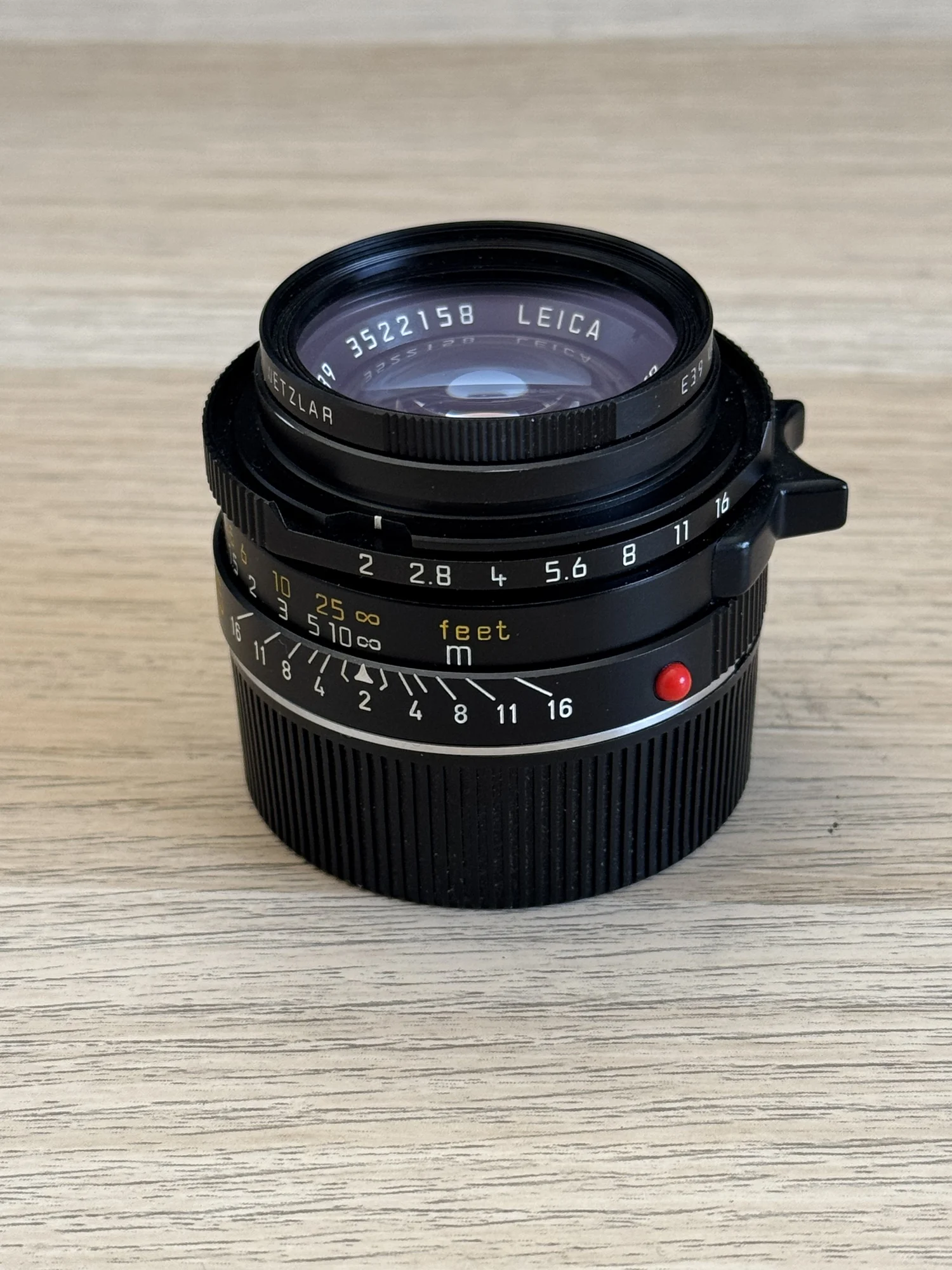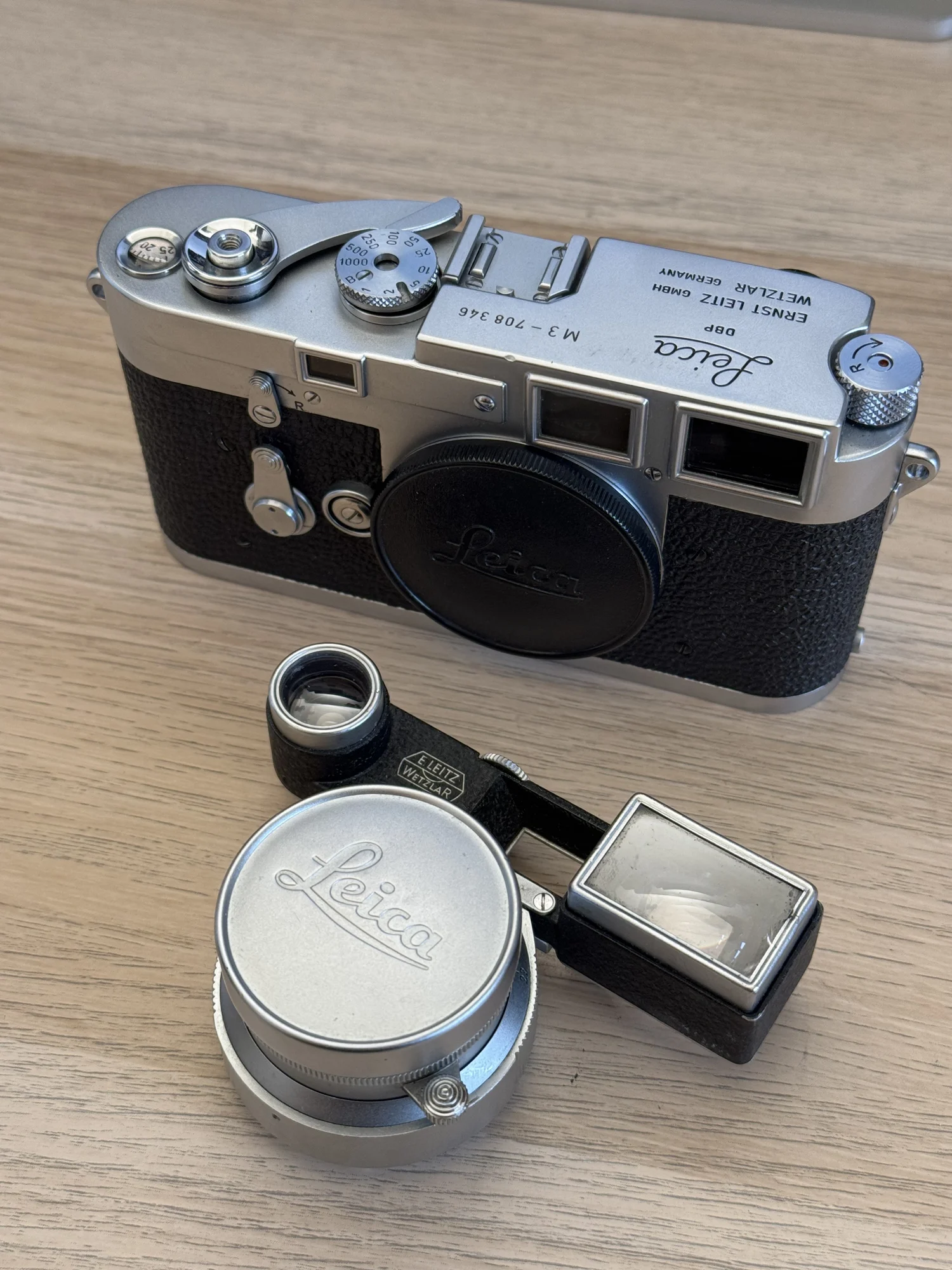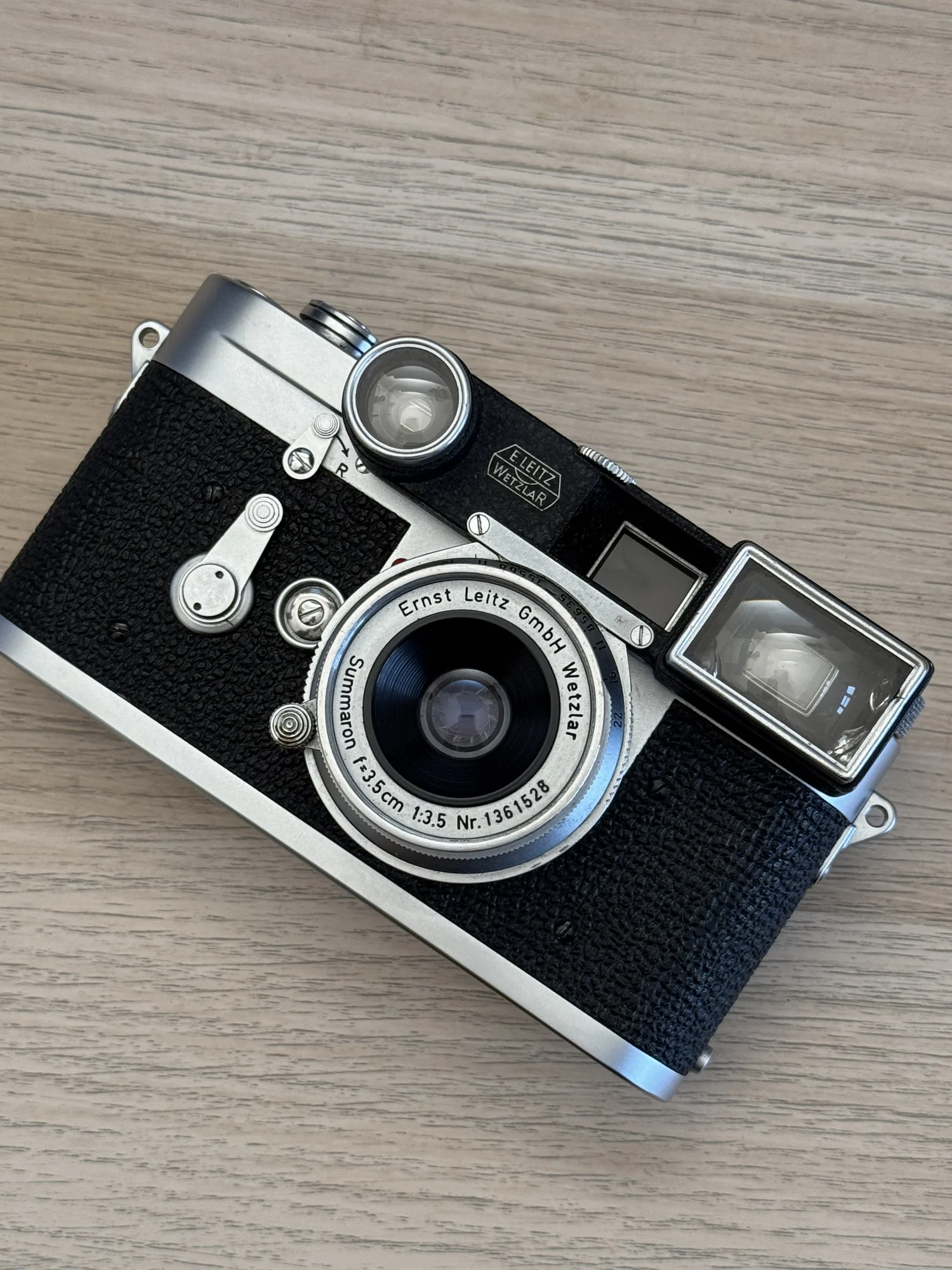
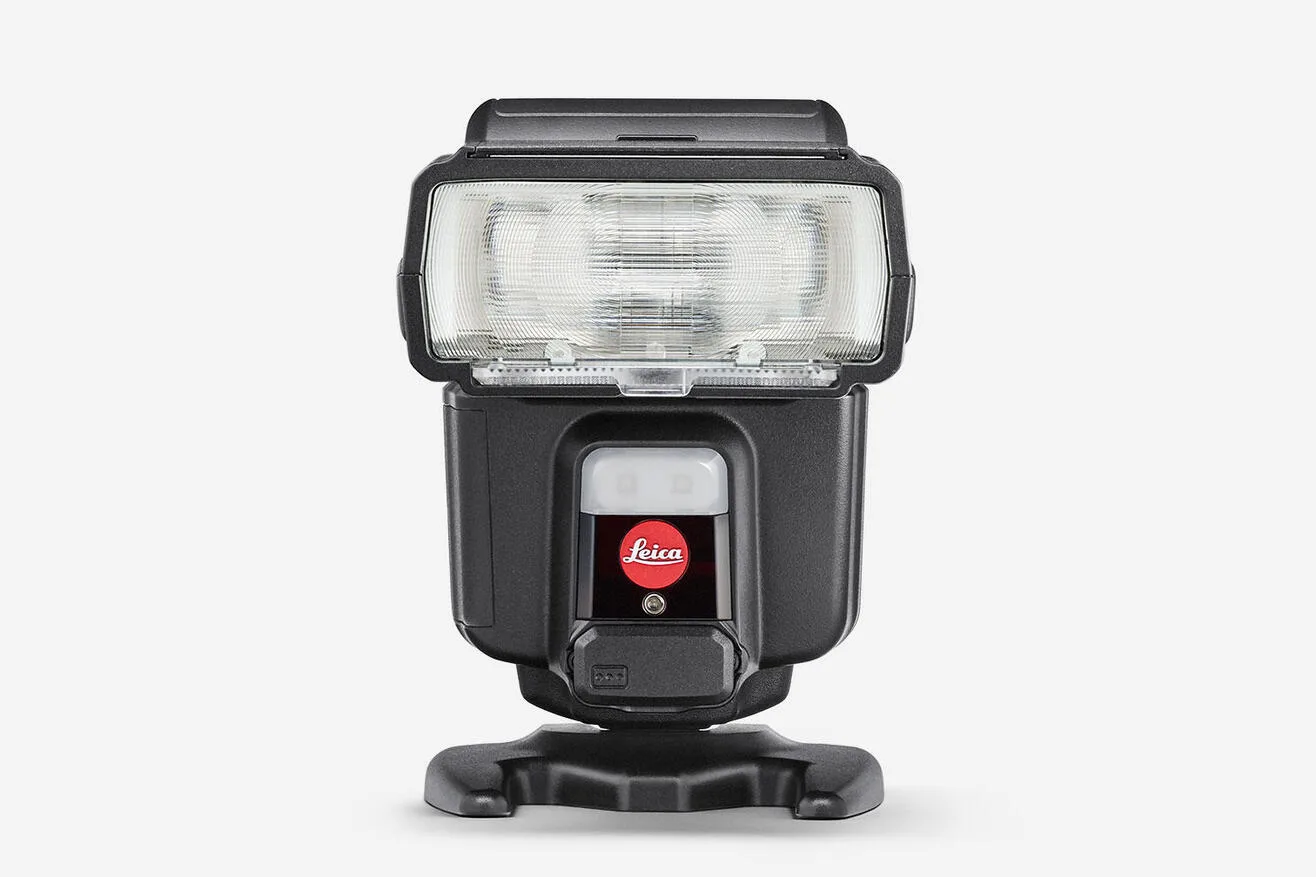
"Can my M do TTL?" is the flash question we hear most. Only two film Ms can: the M6 TTL and the M7. Every digital M from the M8 onwards can too, but with a completely different system, which is why one flash can be automatic on one M and manual-only on the next.
Body details below come from Leica's own manuals and technical data; third-party details come from the manufacturers' published compatibility lists.
Why are there two kinds of Leica TTL?
TTL means the camera measures the flash and tells it to stop once there is enough light. Leica has done this in two incompatible ways.
- Film TTL. On the M6 TTL and M7, a cell in the body reads flash light reflected off the film while the shutter is open, then sends a "stop" signal through an extra contact in the hot shoe.
- Digital TTL. From the M8 on, the camera works out flash power digitally, so it needs a flash built for digital M-TTL.
The two protocols don't talk to each other, so a flash built for one isn't automatically right for the other.
Which Leica M bodies can do flash TTL?
| Body | Year | Flash TTL | What to know |
|---|---|---|---|
| M3, M2 | 1954, 1957 | None | Cold shoe; proprietary sockets need an adapter |
| M4 | 1967 | None | Cold shoe, standard PC sockets |
| M5 | 1971 | None | First M with a hot shoe |
| CL | 1973 | None | Sync 1/60, no PC socket |
| M4-2, M4-P, M6 | 1977–1984 | None | Hot shoe and PC socket |
| M6 TTL | 1998 | Film TTL | Won't fire flash without batteries |
| M7 | 2002 | Film TTL | Needs batteries; manual-power HSS with a Metz SCA 3502 |
| MP | 2003 | None | No flash metering |
| M8, M8.2 | 2006, 2008 | Digital | Sync 1/250, then 1/180 from the M8.2 |
| M9, M-E, M Monochrom | 2009 on | Digital | Sync 1/180 |
| M (Typ 240) | 2012 | Digital + HSS | First M with high-speed sync |
| M-A | 2014 | None | Mechanical, no PC socket |
| M10 family | 2017 | Digital + HSS | Every Leica system flash except the SF 20 |
| M11 family | 2022 | Digital + HSS | No flash with the electronic shutter |
| M6 (2022) | 2022 | None | No flash metering |
| M EV1 | 2025 | Digital + HSS | Same flash specification as the M11 |
The MP is often treated as a mechanical M7, and the 2022 M6 as an M6 TTL reissued. Neither does flash TTL: Leica's manuals say plainly that both lack flash metering. And the first M with a hot shoe was the M5, not the M4-2.
What happens if the shutter is faster than the sync speed?
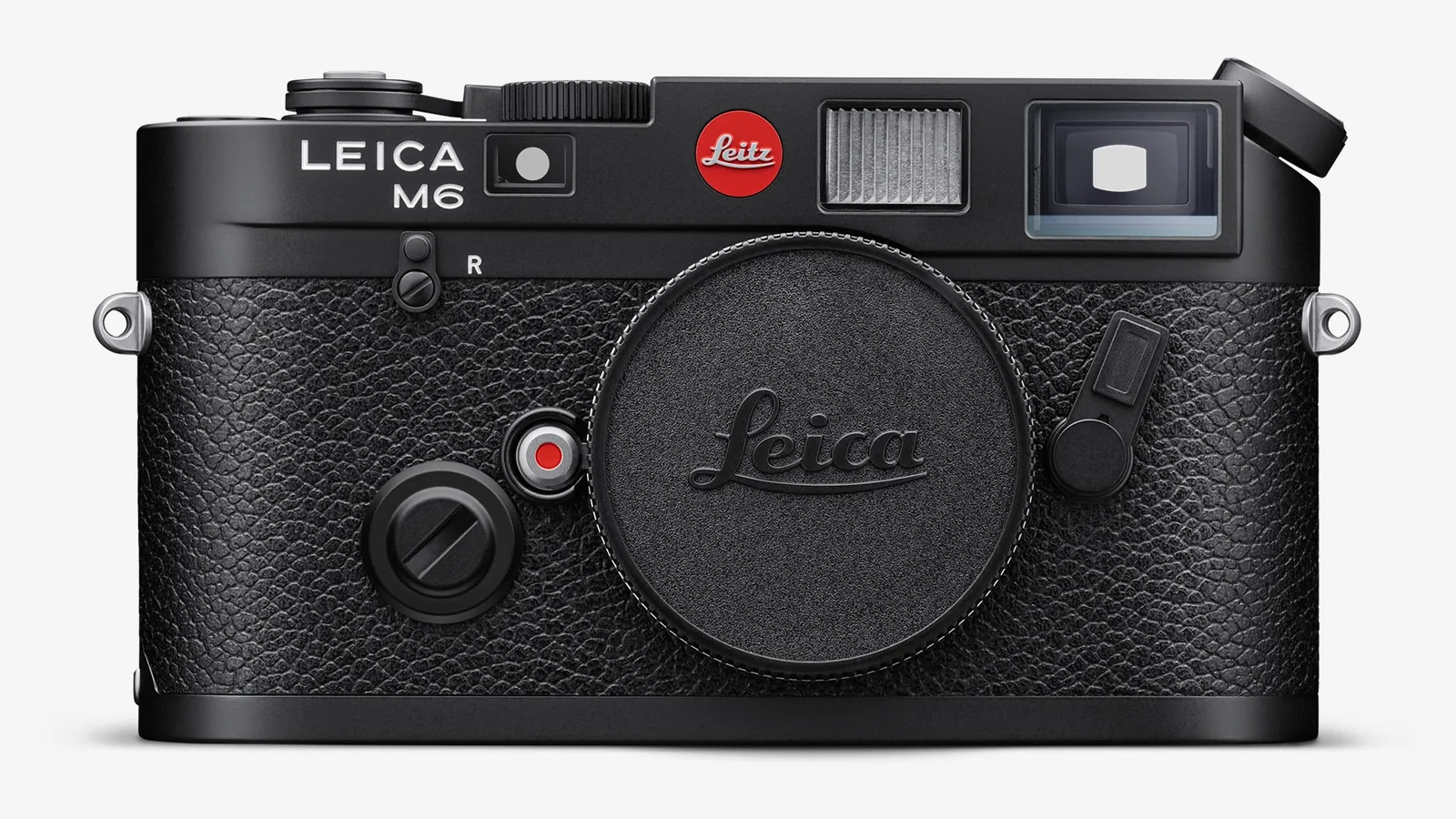
A focal-plane shutter can only sync at a speed where the whole frame is uncovered at one instant. On film Ms that is 1/50, the lightning symbol on the dial (1/60 on the CL). Go faster and the second curtain is already crossing the frame when the flash fires: in our own test shots, 1/125 loses roughly half the frame and 1/250 leaves about a quarter.
The M6 TTL and M7 simply won't fire the flash above 1/50, except an M7 with an HSS flash. On the M7 you can leave the dial on AUTO; it switches to 1/50 itself.
Which Leica flash works with which M?
The number in each Leica flash name is its maximum guide number (ISO 100, metres), measured at different zoom settings. At 35mm, the SF 24D is really GN 20 and the SF 60 GN 32.
TTL = camera-metered auto. A = auto using the flash's own sensor. M = manual. HSS = high-speed sync. A dash means not supported.
| Body | SF 20 | SF 24D | SF 58 | SF 26 | SF 40 | SF 64 | SF 60 |
|---|---|---|---|---|---|---|---|
| Film M without TTL | A, M | A, M | A, M | — | M | A, M | M |
| M6 TTL | TTL, A, M | TTL, A, M | TTL, A, M | — | M | A, M | M |
| M7 | TTL, A, M | TTL, A, M | TTL, A, M | — | TTL, M | A, M | M |
| M8, M8.2 | A, M | TTL, A, M | TTL, A, M | M | M | A, M | M |
| M9, M-E, M Monochrom | A, M | TTL, A, M | TTL, A, M | TTL, M | M | A, M | M |
| M (Typ 240) | A, M | TTL, A, M | TTL, A, M, HSS | TTL, M | TTL, M | TTL, A, M, HSS | M |
| M10 family | — | TTL, A, M | TTL, A, M, HSS | TTL, M | TTL, M, HSS | TTL, A, M, HSS | TTL, M, HSS |
| M11 family, M EV1 | — | — | TTL, A, M, HSS | TTL, M | TTL, M, HSS | TTL, A, M, HSS | TTL, M, HSS |
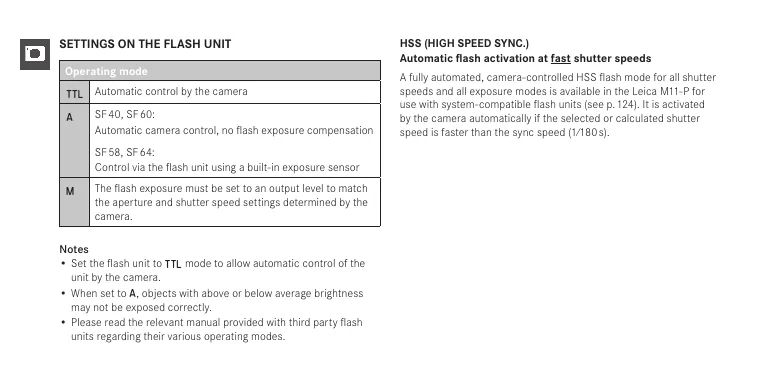
The A column matters most on film Ms without TTL. The SF 20, SF 24D, SF 58 and SF 64 carry their own sensor, so they expose automatically on an MP, M-A or 2022 M6. The SF 26, SF 40 and SF 60 hand automatic control to the camera, so on those bodies they fall back to manual.
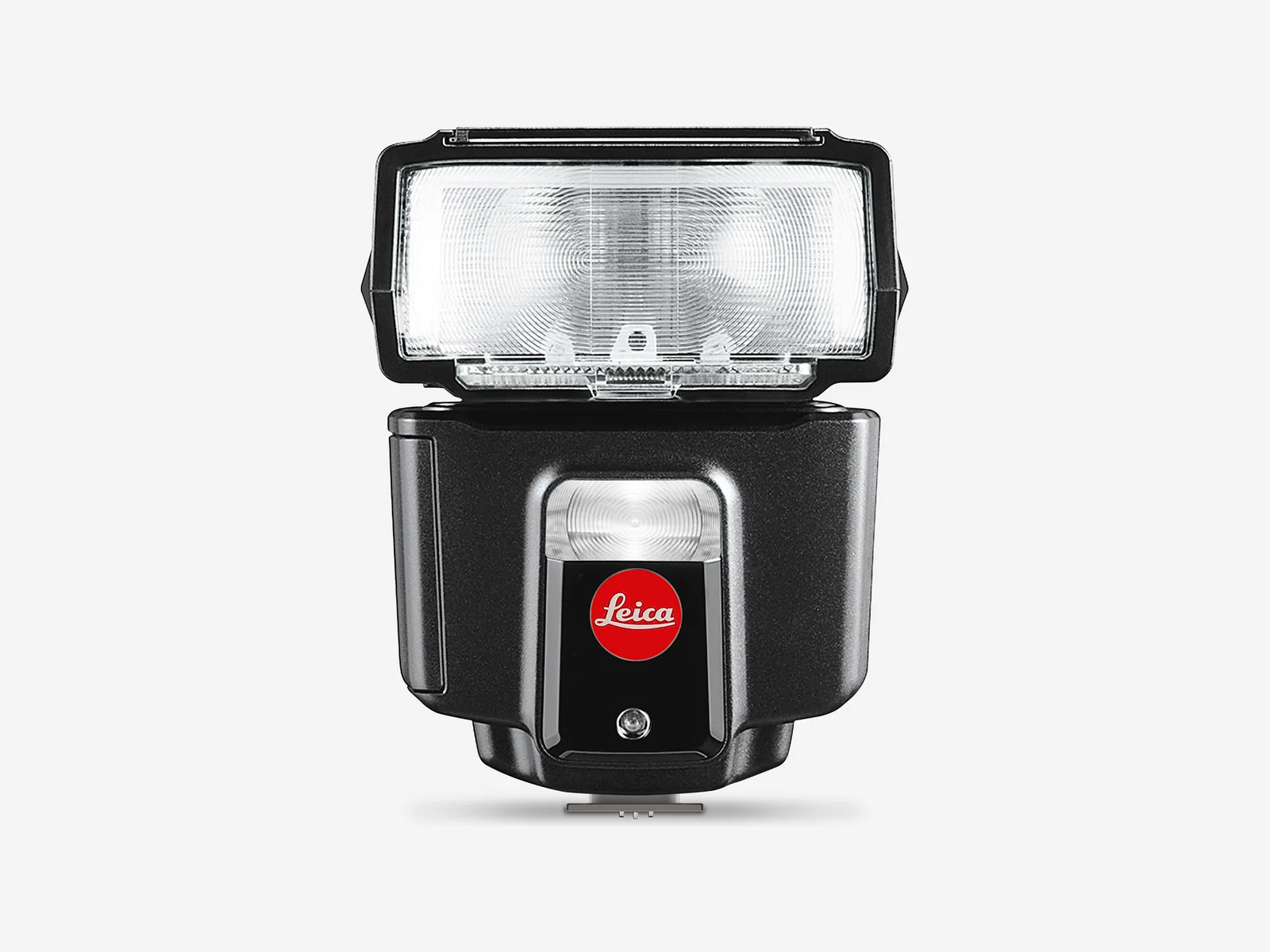
SF 20 (1998)
Launched with the M6 TTL: film TTL on the M6 TTL and M7, GN 20 at 35mm, fixed head, two CR123A cells. Elsewhere it offers A mode at f/2.8, f/5.6 or f/11. It has no digital TTL, so it is A/M only from the M8 to the M240, and the M10 manual excludes it.
SF 24D (2003)
The "D" means digital: film TTL on the M6 TTL and M7, digital TTL on the M8, M9, M240 and M10. Its A mode offers six apertures from f/2 to f/11, which is why we most often pair it with an MP, M-A or 2022 M6. Clip-on wide and tele panels are recognised automatically. The head is fixed, and it isn't on the M11's list.
SF 58 (2009)
The first Leica flash whose head tilts and swivels, with a 24–105mm zoom and a secondary reflector for bounce. Film TTL on the M6 TTL and M7, digital TTL from the M8 to the M11, HSS from the M240. At 355 g before batteries and 148mm tall, it is top-heavy on an M.
SF 26 (2014)
Small and light, made for digital Ms: TTL on the M9, M240, M10, M11 and M EV1, with compensation set in the camera menu. Don't buy it for a film M. Its auto mode and power control depend on the camera, leaving at most a three-step slave mode. The M-A manual recommends it, but the M-A can't control it.
SF 40 (2015)
The default choice for most digital M owners: compact, full TTL, HSS from the M10. Its A mode is camera-controlled, so most film Ms get manual only. Leica's technical department has told users it works in TTL on the M7, without HSS, and owners confirm it.
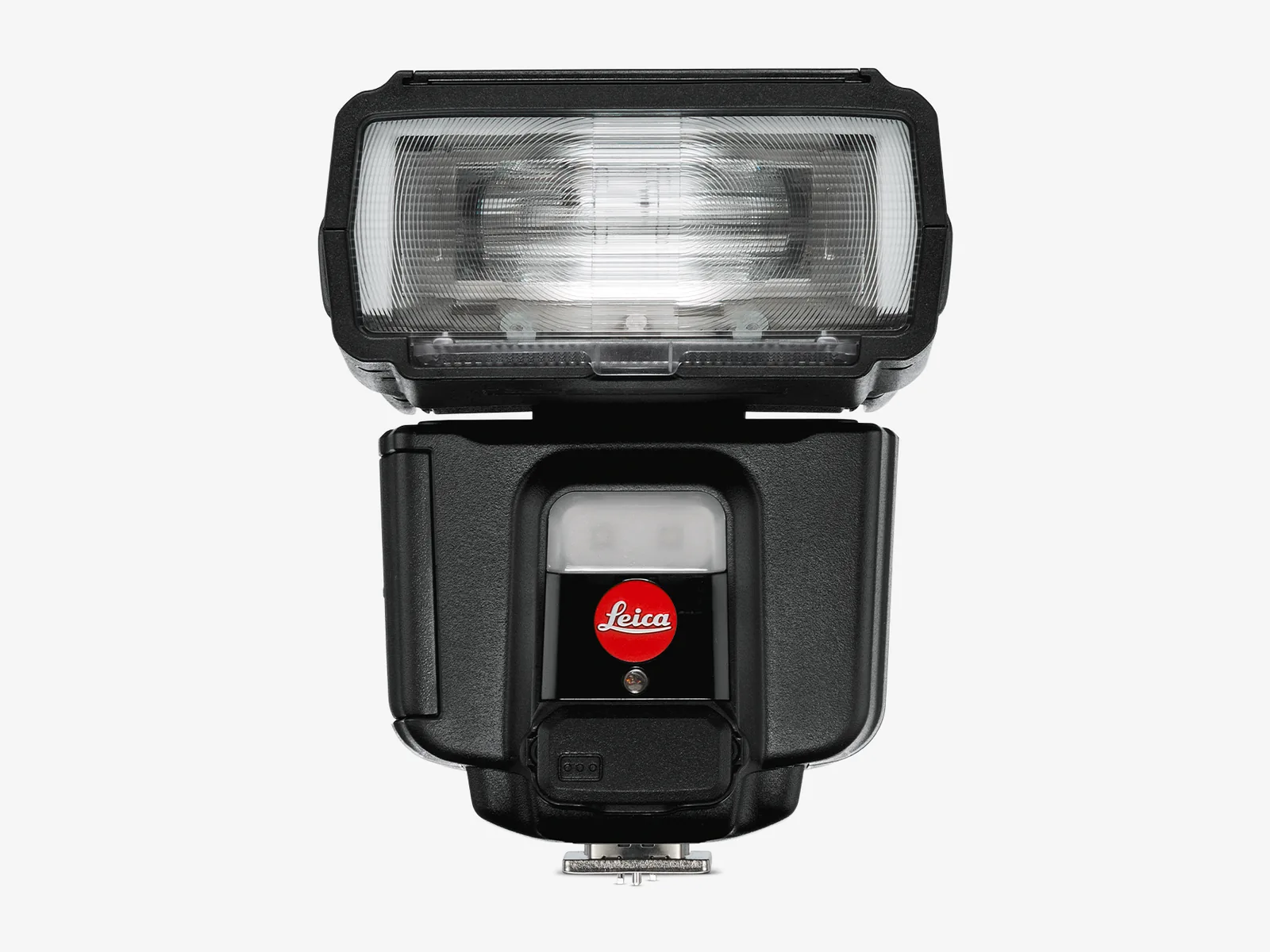
SF 64 (2015)
The most powerful and heaviest: GN 64 at 200mm, 24–200mm zoom, 422 g. TTL with HSS on the M240, M10, M11 and M EV1. Its sensor-based A mode returns, so it works automatically on film Ms; for film TTL, choose an SF 20, SF 24D or SF 58.
SF 60 and SF C1 (2018)
The current flagship, launched with the SF C1 radio controller. Leica names the M10-R, M10 Monochrom, M11 family and M EV1 as compatible; on film Ms its manual allows manual mode only.
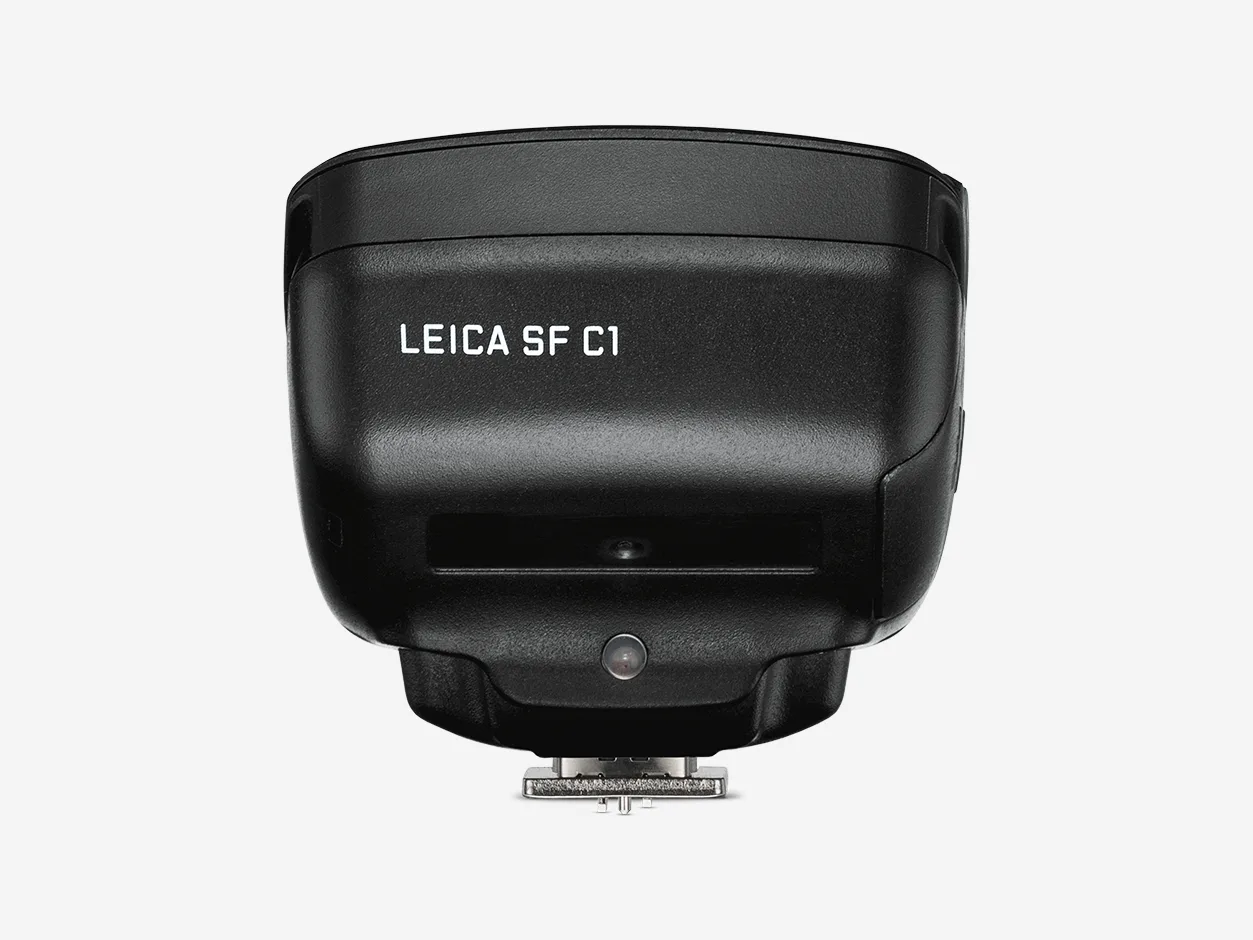
The SF C1 sits in the hot shoe and controls the SF 60 off camera over 2.4 GHz, in up to three groups, and can also control Nissin flashes.
Which third-party flashes can do Leica TTL?
Only three routes appear on manufacturers' own Leica compatibility lists.
- Metz SCA 3000 flashes on an SCA 3502 adapter. The 54 MZ-4i, 44 MZ-2, 40 MZ and similar do film TTL on the M6 TTL and M7. On digital bodies the adapter version matters: M4 for the M8 and M9, M5 for the M240. It is printed on a sticker; check before buying.
- Godox L versions: iT30Pro L, iT32 with X5 L, XProII L trigger. Godox lists the M10 with TTL and HSS. For the M11, update the iT30Pro L or iT32 to the firmware of 13 October 2026, which Godox says improves M11 compatibility; the XProII L's list stops at the M10. Hold the left-hand catch and push the foot fully home.
- Profoto Connect Pro for Leica. TTL and HSS with Profoto lights such as the A10, on the M11 family only. The A10 has no Leica-shoe version, so it is always off camera.
Current Metz, Nissin and Olympus/Panasonic-fit flashes are manual-only on an M. In our experience Godox flashes underexpose on the M6 TTL, so for film TTL stick with Leica or Metz.
Which small flash suits a film M without TTL?
Without flash metering you only need a good auto mode or a manual you're happy to calculate. These single-contact flashes are the ones we recommend:
| Flash | GN | Weight | Notes |
|---|---|---|---|
| Godox Lux Junior | 12 | 130 g | A mode fixed at f/2.8, ISO 100 |
| Godox Lux Senior | 14 | 227 g | Folding fan reflector |
| Godox Lux Cadet | 10 | 171 g | A and M modes |
| Godox Lux Elf | 6 | 96 g | Pocket-sized, manual only |
| Godox iA32 | 15 | 117 g | True auto; screen shows distance |
| Nikon SB-30 | 16 | 92 g | Small, proper auto mode |
| Fujifilm EF-X20 | 20 | 100 g | Tiny; manual only on an M |
| Nissin i40 | 40 | 203 g | Tilts and swivels; manual only |
For manual flash: aperture = GN ÷ distance in metres at ISO 100, and ISO 400 doubles the GN. A Lux Junior on ISO 400 film acts like GN 24, so a subject at 3 m wants f/8.
Daylight fill is where 1/50 hurts. Sunny ISO 100 film needs about f/22 at 1/50, and a small flash can't reach far at f/22. A digital M's 1/180 sync and automatic HSS with an SF 40, SF 60 or SF 64 make it far easier.
What to check before mounting a flash
- Speed: lightning symbol or slower on film Ms; 1/180 on digital (1/250 on the M8).
- Batteries: the M6 TTL and M7 need power and a half-press to wake the meter.
- Mounting: switch both off, slide the foot fully home and tighten the ring.
- Shutter: no electronic shutter for flash on the M11 or M EV1.
- Old flashes on digital bodies: Leica's newer manuals say only single centre-contact flashes fire safely. Use multi-contact flashes like the SB-30, EF-X20 and i40 in manual and test first. Measure a vintage flash's trigger voltage: the R8 manual sets 24 V, and in 2023 Leica advised an owner to stay under 18 V on current cameras. If in doubt, use a Wein Safe-Sync.
Choosing quickly
| You have | You want | Choose |
|---|---|---|
| M6 TTL or M7 | TTL | SF 20 or SF 24D |
| MP, M-A or 2022 M6 | Auto exposure | SF 24D or SF 58 in A mode |
| M10 | Small TTL flash | Godox iT30Pro L or SF 40 |
| M11 | TTL and HSS | SF 40 or SF 60 |
| Digital M | Off-camera lighting | SF 60 with SF C1 |
| Any film M | Small and good-looking | A Lux-series flash |
If flash matters in choosing a body, settle film TTL, digital TTL or no TTL first; you can compare bodies on our Leica cameras page. And if an M6 TTL or M7 won't fire a flash with fresh batteries at 1/50, our Leica repair and CLA service can check the camera.