
Before you buy a used Leica film camera, from a shop or a private seller, ask ten things: when it was last serviced; whether the rangefinder lines up at infinity, sideways and vertically; what state the shutter curtains are in; whether the viewfinder is clear and every frame line appears; whether the serial number matches the model and year; whether the top plate, finish and engravings are original; whether the lens has haze, fungus, separation or cleaning marks; whether the lens is coded, and by whom; what the written condition report says and what happens if it's wrong; and whether the price fits the condition. A good seller answers all ten in writing before you pay. If one can't, the camera may still be fine, but the risk is yours.
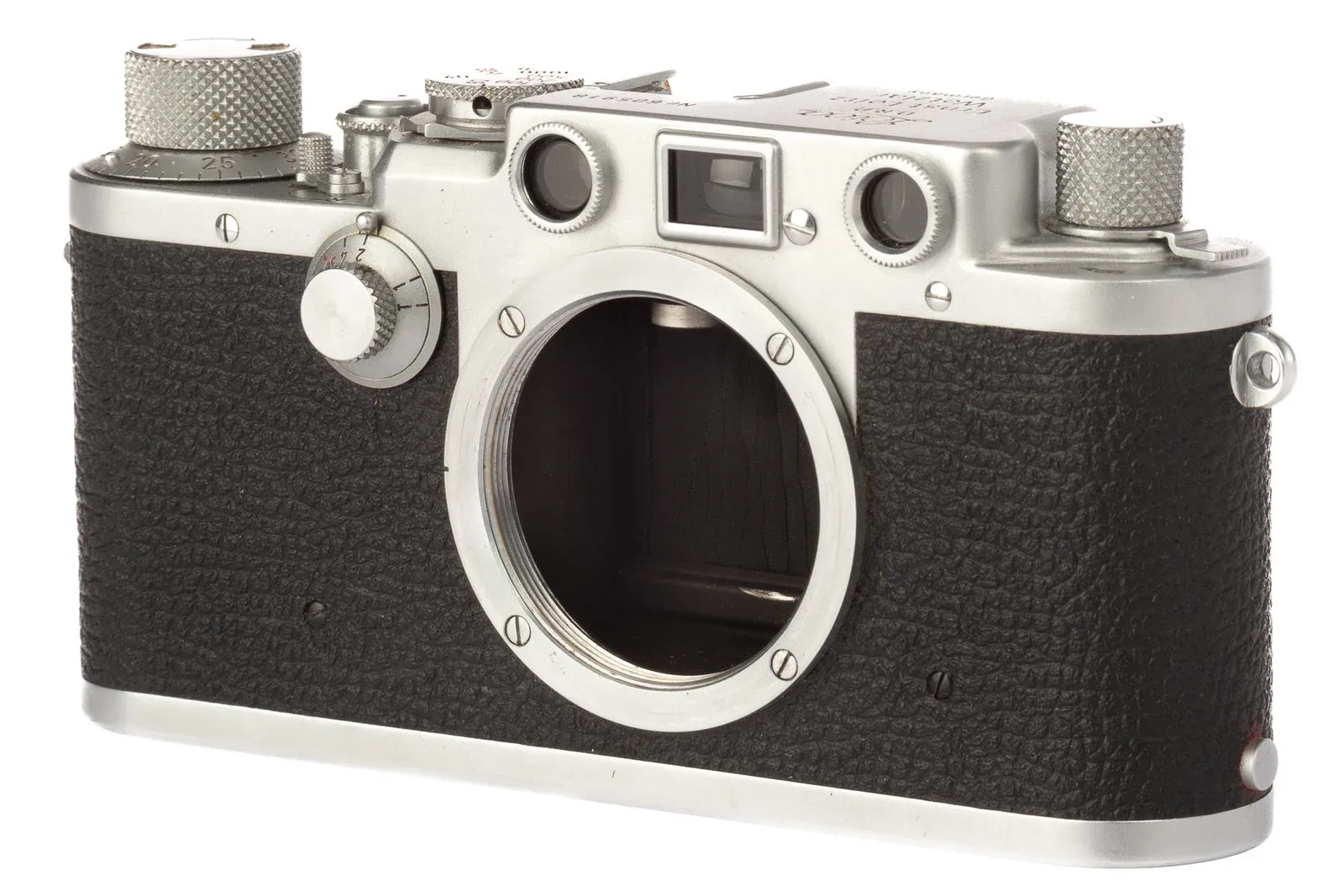
This guide covers the film Ms most people choose between (M2, M3, M4, M6, M-A), the screw-mount III series, and their lenses. For what each model added and when, see our short history of Leica. For using one once it's yours, see the Leica M guide.
The ten questions at a glance
| Question | A good answer | Be wary of |
|---|---|---|
| 1. When was it last serviced? | A date, a name and a job sheet | "Recently serviced", no paper |
| 2. Does the rangefinder line up? | Closes at infinity, no sideways or vertical offset | Nobody has done the infinity test |
| 3. What state are the curtains in? | No pinholes, speeds measured | "Fires at all speeds" |
| 4. Is the viewfinder clear? | No haze, contrasty patch, all frame lines | Photos taken only from the front |
| 5. What is the serial number? | A clear photo that fits the model and year | A serial withheld, or one that doesn't fit |
| 6. Is everything original? | Original, or replacements disclosed | Rare engravings at a price that doesn't add up |
| 7. Is the lens clean inside? | Checked with a light through both ends | "Clear glass", judged from the front |
| 8. Is the lens coded? | Factory code, or none, stated plainly | Codes nobody can account for |
| 9. What does the report say? | Written report, return window, warranty | "As seen" when the description promises more |
| 10. Is the price right? | Explained by grade, service and originality | A bargain that needs a service |
1. When was it last serviced, and by whom?
A CLA (clean, lubricate, adjust), as we do it on our bench, is a strip-down: old lubricant out, new in, speeds re-timed, rangefinder set. A Leica unserviced for decades can still fire, but its lubricants have aged. Leica's instruction manual for the M-A says a camera left unused should be wound and fired at every speed about every three months "to prevent gumming up of the lubrication points".
Ask for the date, who did it, and the job sheet. No record? Assume it needs one and price that in (question 10).
2. Does the rangefinder close at infinity, sideways and vertically?
Set the lens to infinity, aim at something far away, and check that the two images in the patch merge completely. Offset sideways means the horizontal adjustment has drifted; one image higher than the other means the vertical has. The Leica M guide shows the check with diagrams.
Ask the seller to do the test and say what they saw, or better, for a test roll shot wide open at close range: a rangefinder true at infinity can still miss up close. Leica's M-A manual notes that with lenses of f/1.4 and faster wide open, small tolerances in camera and lens add up, and recommends having the pair checked together if focus is consistently off one way.
3. What state are the shutter curtains in?
Leica describes the shutters of its current film Ms as rubberised cloth: its M6 technical data says "focal plane shutter with rubber liner", the M-A manual "rubber blanket slotted shutter". The older Ms and III-series bodies on our bench have cloth curtains too.
The M-A manual warns that a lens "can have the effect of a magnifying glass when exposed to direct frontal sunlight". A Leica left lens-up on a sunny windowsill can end up with a burnt pinhole in the curtain. On the films we see, that shows as a bright spot or streak in the same place, frame after frame. So ask:
- Has anyone looked at both curtains under a bright light? Small holes are easy to miss.
- Were the speeds measured, or just fired? "Fires at all speeds" tells you the curtains move, not that 1/1000 is really 1/1000 or that the slow speeds don't hang.
- On an M6, does the meter read sensibly? Leica's technical data says the M6 meters light reflected by a 12mm spot in the centre of the first shutter curtain, so the curtain is part of the meter. Ask for a reading compared with a handheld meter or a phone app.
For screw-mount cameras, our history of Leica puts it bluntly: a III-series body is 70 to 100 years old, so look first at the curtains, the slow speeds and the rangefinder.
4. Is the viewfinder clear, and do all the frame lines appear?
Ask for a photo through the finder, or a plain description: bright or grey, a contrasty patch or a faint one, any haze or cloudy area. On the M3 and M2 especially, a hazy or fading finder is a known age-related fault (see our history of Leica). On our bench, haze can often be cleaned; a patch faded by deteriorating optics inside is a bigger job.
Then check the frame lines, which come up as a lens is mounted (the M3 has lines only for 50, 90 and 135mm). Flick the frame selector lever and make sure each pair appears and is sharp; in our experience, missing or dim lines point to the illumination window or the finder optics.
5. What is the serial number, and does it match the model and year?
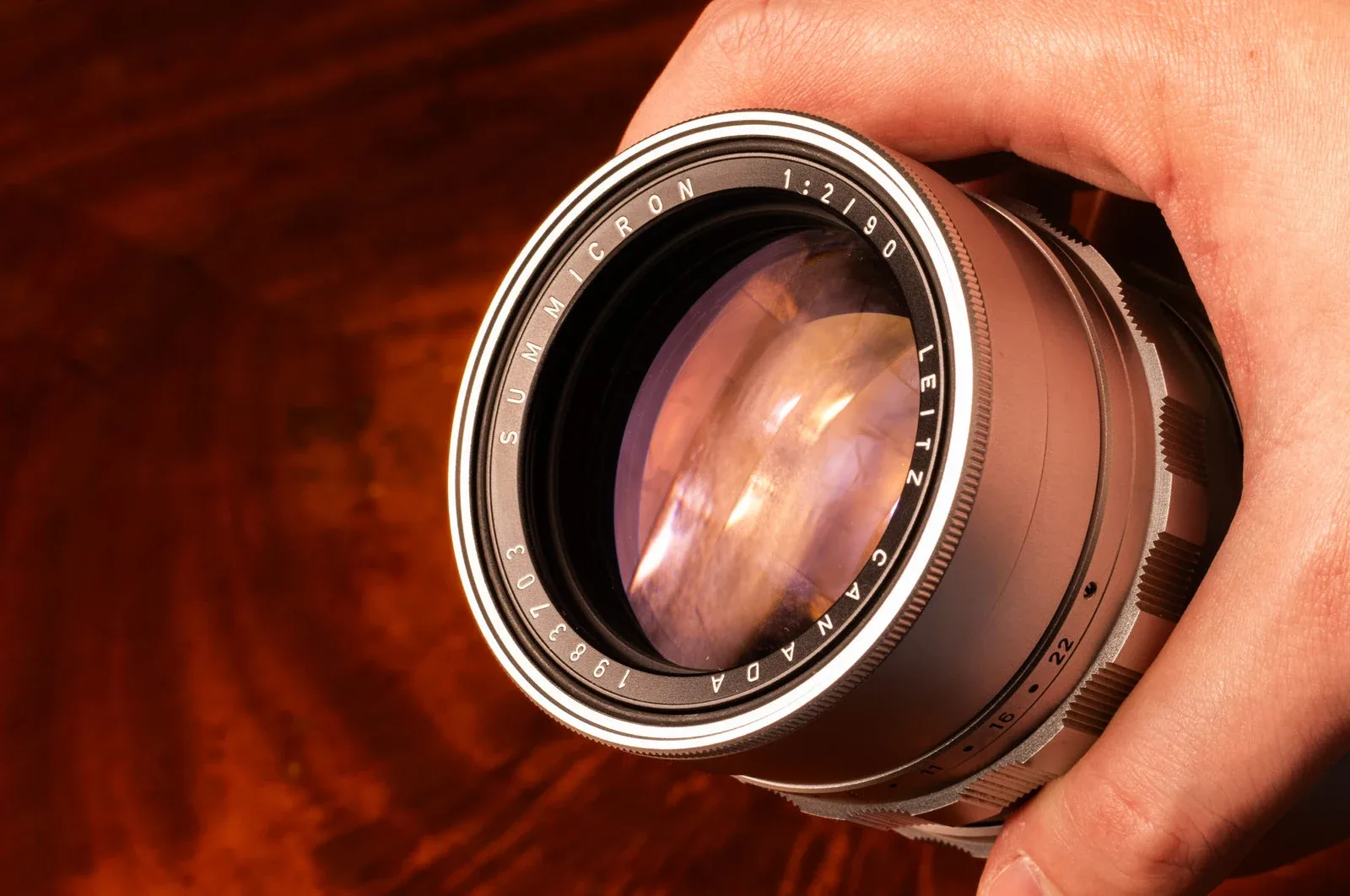
Leica engraves a serial number on every body and on most lenses. On the film Ms and screw-mount cameras we handle it is on the top plate; on lenses, usually the front ring. Jason Schneider, writing for the Leica Society International, is plain about it: "Always ask for the serial number when purchasing or evaluating any Leica." Then look it up in one of the published serial lists compiled from Leitz's factory records, such as the tables on the Leica Wiki, and check it falls in a block made for that model.
Two cautions from the same article. The list isn't perfect: Schneider quotes the Leica historian James Lager, "the entered number may not match the camera in hand", so treat the year as approximate. And factory upgrades are real: in the 1930s and after the war, Leitz upgraded many cameras to later models while keeping the original serial. A camera that looks like a III but carries a Leica I number may be a genuine factory conversion (an Umbau), not a fake. A tell that does point to a fake: Leitz never put a zero in front of a serial, so a "Leica" numbered 0547 is not one.
Ask for a sharp photo of the serial and check it against the lens serial, box and paperwork. Our listings print it for this reason.
6. Is everything original: top plate, finish and engravings?
Not every repair is a problem. We see replaced top plates and later repaints on the bench; a competent replacement still makes a working camera, and it's a problem only if sold as untouched. A black camera repainted later is not one that left the factory black, and the price should say which you're buying.
Military and rare engravings call for the most care. Genuine military Leicas exist and are collected, but so many fakes were made that an engraving on its own proves nothing. Most fakes are Soviet FED or Zorki cameras, themselves copies of the Leica II, with the Soviet markings removed and Leica engravings added, often with a brass finish and military markings, like the example below.
Mike Eckman's guide to spotting a fake Leica lists the tells. The clearest is the rangefinder coupling inside the lens mount: a genuine Leica has a round roller, while a converted FED or Zorki has a fixed metal arm. "If there is no wheel, it's not a Leica." He also points to curtains with no stitching near the edges, speed-dial and frame-counter numbers crudely cut and not paint-filled, and soft, ill-defined top-plate edges.
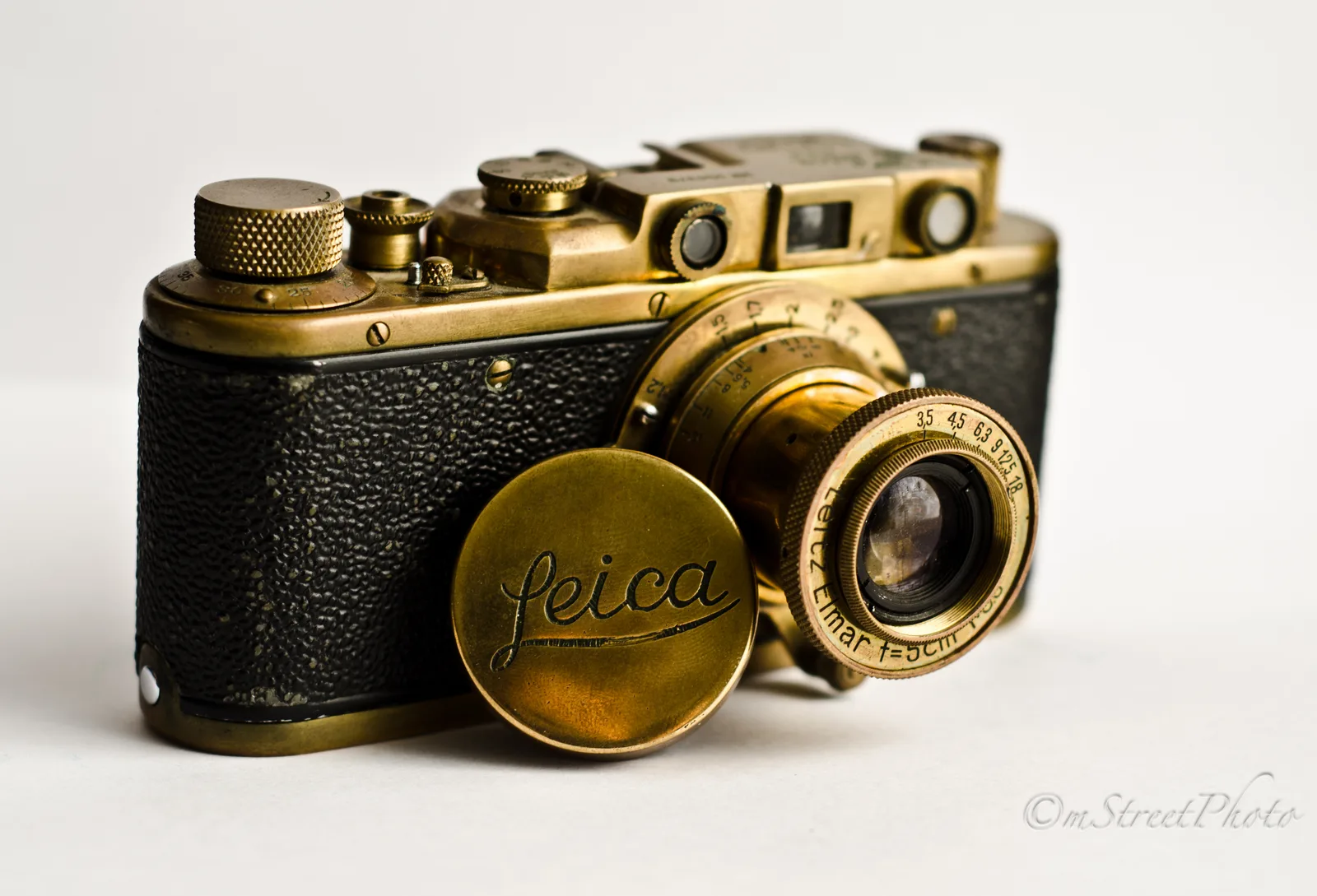
A converted FED or Zorki can be a usable camera, but it's worth a FED or Zorki's price. If a seller asks a collector's price for a rare engraving, ask what supports it: a serial that fits, a history, a specialist's opinion. Schneider describes a supposed military IIIc exposed exactly that way, by checking its serial against the factory's shipping records.
7. Does the lens have haze, fungus, separation or cleaning marks?
A photo of the front element tells you little. Lens faults are inside, and show when you shine a light through from the back and look in at an angle, then the other way round. Ask the seller to do that and say what they saw. Our grading page names the four things to ask about. This is how they look on our bench:
- Haze: a fine grey fog on or between the elements. It lowers contrast and adds flare.
- Fungus: threads or branching lines. The M-A manual warns against storing equipment in leather bags for long periods for this reason.
- Separation: the cement between two glued elements failing, seen as a silvery or rainbow-edged patch, often at the edge.
- Cleaning marks: fine scratches in the coating from years of wiping. A few rarely show in pictures; heavy marks add flare.
In our experience, haze and fungus can often be cleaned; separation means taking the cemented group apart and re-cementing it, a specialist job. Ask whether the lens has been opened before, and by whom.
8. Is the lens coded, and was it done by Leica?
This matters only on a digital M. Leica's 6-bit code is a pattern of black and white marks on the lens bayonet that tells the camera which lens is fitted. Leica keeps a list of older M lenses its Customer Service can update; the April 2015 list includes, for example, the 50mm Summicron-M made from 1969 and the 35mm Summicron-M made from 1979. Not every lens is on it.
An uncoded lens still works on a digital M; you select it in the menu (see the Leica M guide). So the real question is "if it's coded, who did it?" A factory code is a plus. In our view, home-painted marks do no harm, but they aren't a factory conversion and the listing shouldn't imply one.
9. What does the written condition report say, and what if it's wrong?
This protects you, and an honest seller too. In the UK, buying from a trader brings your full rights under the Consumer Rights Act 2015. Section 9 judges satisfactory quality against "any description of the goods" and the price, and excludes anything "specifically drawn to the consumer's attention before the contract is made". So a fault written down before you buy is not grounds to reject the camera later; a fault left out of the report may well be. Buying online or by phone from a trader, the Consumer Contracts Regulations 2013 also give you 14 days to cancel.
From a private seller you have far less. Which? sums it up: the goods "must be as they were described", but the seller "isn't obliged to disclose any faults". The written description is close to your only protection, so get one. A useful report states:
- Model, body and lens serial numbers, and what's included
- A grade on a stated, defined scale
- Cosmetic condition, including replaced or refinished parts
- Shutter speeds measured, not just fired; advance and rewind
- Rangefinder at infinity and close range, horizontal and vertical
- Viewfinder brightness, haze, patch contrast and frame lines
- Optics checked with a light for haze, fungus, separation and marks
- The meter, if fitted, tested against a reference
- Service history and any parts replaced
- Warranty and return terms, and anything sold "as seen"
For the practice we hold ourselves to, see our grading system: five defined grades from M (Mint) to R (Restoration), and six inspections from optics to shutter timing. Each product page carries a condition report stating what we found: the serial numbers we verified, the shutter speeds we measured, any parts we replaced. Serviced cameras carry a six-month mechanical warranty, and our shipping and returns page sets out the 14-day window. Pieces graded R are sold as seen, without warranty, and we say so on the listing.
10. Is the price right for this condition?
- Add the service. An unserviced body plus a CLA is the real cost; in our experience a serviced camera with a warranty is often the cheaper buy. See our repair price list.
- Pay for the condition you'll use. A camera with honest wear and a sound mechanism (F on our scale) takes the same pictures as a Mint one. To shoot, mechanism and optics matter more than finish.
- A bargain is a question, not an answer. A price well under the going rate usually means an answer is missing.
What we check on every Leica we sell
Before a Leica is listed, we check and record the serial numbers and parts consistency; write up the cosmetic condition; check the optics with a light for haze, fungus, separation and marks; test the rangefinder and look at the finder and frame lines; measure the shutter speeds and rule out capping; test the meter under power where there is one; run film through the transport; and grade it on our five-level scale. Anything we service or certify also gets a filmed inspection you can view by QR code. Browse used Leica cameras, the Leica M shelf or the screw-mount shelf.
Frequently asked questions
How do I know if a used Leica needs a CLA?
If there's no record of a service in recent years, assume it does. The signs we see most on the bench: slow speeds that hang, a gritty advance, a patch that doesn't close at infinity, and uneven exposure across the frame at high speeds.
Is it safe to buy a used Leica from a private seller?
It can be, but your legal protection is narrower: in the UK the goods must be as described, and the seller needn't point out faults. Get a written description, a photo of the serial and, ideally, a test roll.
How can I tell if a Leica is fake?
Look inside the lens mount at the rangefinder coupling: a genuine Leica has a round roller, a converted FED or Zorki a fixed arm. Check the serial against a published list, and be sceptical of brass finishes and military engravings at collector prices.
Does the Leica M6 have titanium shutter curtains?
No. Leica describes the M6 shutter as a focal-plane shutter with rubber liner, that is, rubberised cloth. The M6 Titanium was a titanium finish on the outside of the camera.
Can I use an old Leica M lens on a digital M?
Almost always. An uncoded lens just needs selecting in the menu, and Leica can 6-bit code many older ones. A few older lenses don't suit every body: Leica's M-A manual, for one, lists the 50mm Summicron with close-up function and the collapsible 90mm Elmar of 1954 to 1968 as incompatible. Check your camera's manual before you buy.
Picture credits
The brass-finished fake Leica: photo by John Vance, CC BY 2.0, via Wikimedia Commons. All other photographs are our own.