Almost every 35mm camera owes something to Leica. The 24×36mm frame, the small camera you carry all day, the idea of enlarging a tiny negative into a good print: Leica made them normal. This is the short version of how that happened, and of why a Leica made seventy years ago still takes lenses made today.
Who invented the Leica?
Oskar Barnack, an engineer at the optical company Ernst Leitz in Wetzlar, Germany. He had joined Leitz in 1911, an asthmatic amateur photographer tired of carrying heavy plate cameras, and by 1914 he had built a small camera that used 35mm cine film. Cine cameras ran the film vertically with an 18×24mm frame; Barnack ran it sideways and doubled the frame to 24×36mm. The prototype is now called the Ur-Leica, the "original Leica".
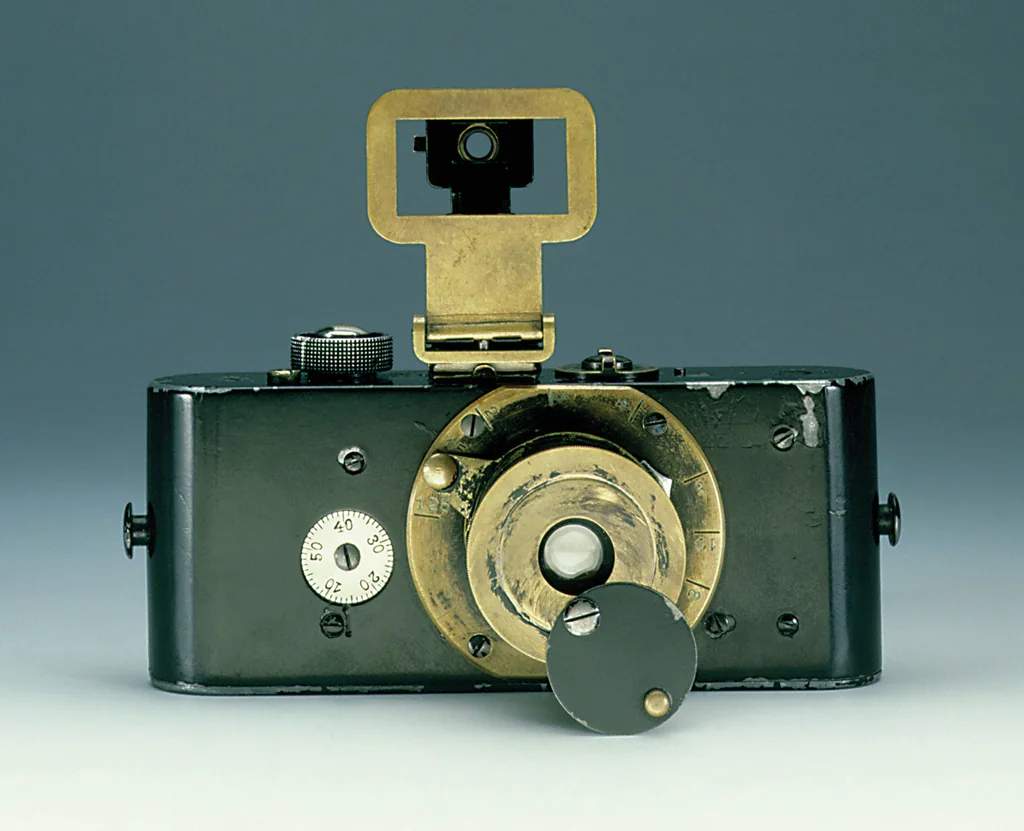
The First World War held the project back. In 1924 Ernst Leitz II decided to put the camera into production ("we will take the risk", in his words), and the Leica I was shown at the Leipzig Spring Fair in March 1925. It was the first 35mm still camera to succeed in mass production: about a thousand were sold in the first year. The name is short for Leitz Camera.
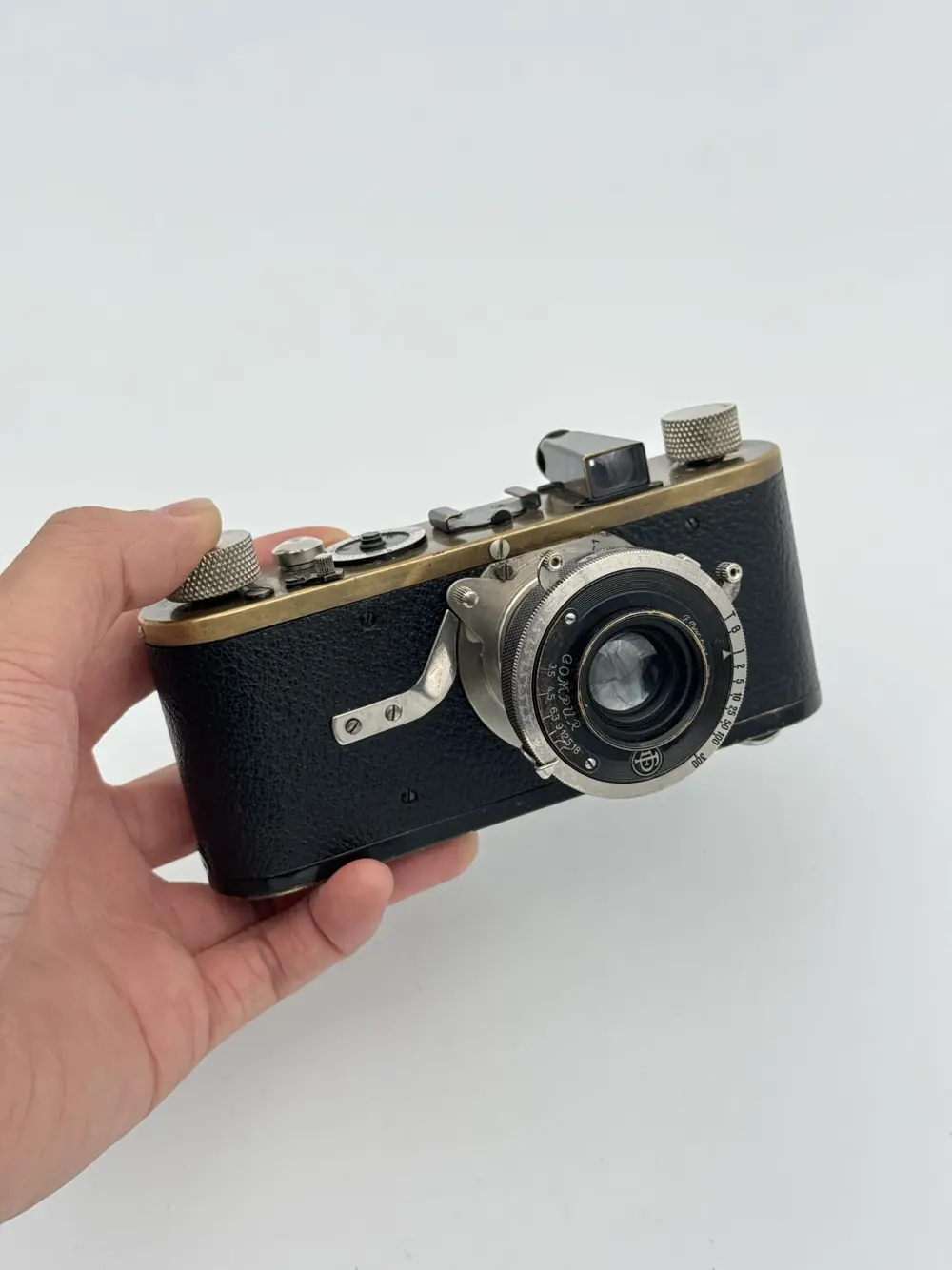
The screw-mount years, 1925–1957
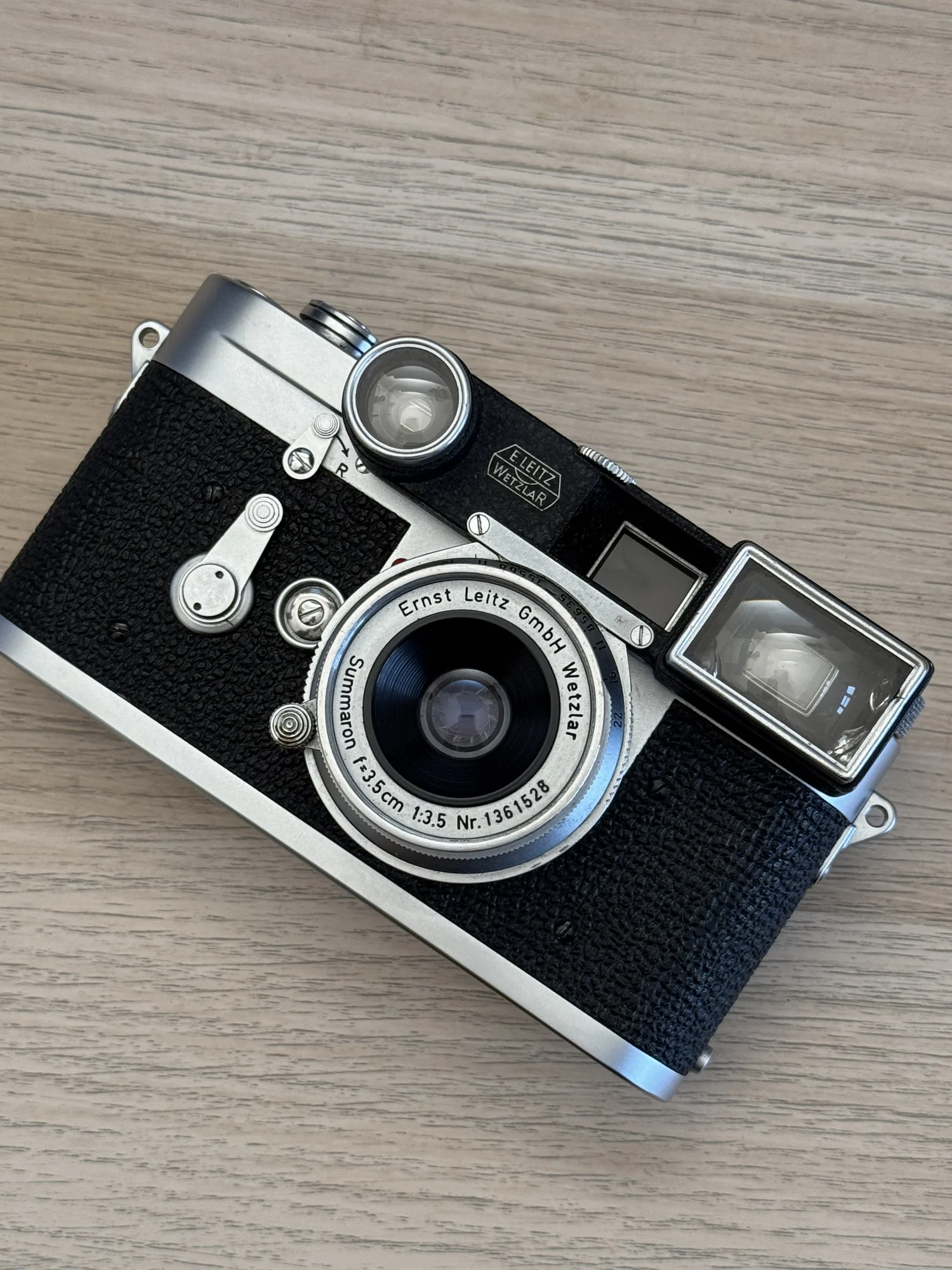
The early Leicas are called Barnack or screw-mount Leicas, after the 39mm thread their lenses screw into. Each model added one thing:
| Model | Year | What it added |
|---|---|---|
| Leica I | 1925 | The first production Leica; the lens was fixed at first |
| Leica I (Model C) | 1930 | Interchangeable lenses on the 39mm screw mount |
| Leica II | 1932 | A rangefinder coupled to the lens |
| Leica III | 1933 | Slow speeds down to 1 second, and a dioptre adjustment |
| Leica IIIa | 1935 | 1/1000 second |
| Leica IIIb | 1938 | Rangefinder and viewfinder eyepieces side by side |
| Leica IIIc | 1940 | A stronger die-cast body |
| Leica IIIf | 1950 | Flash synchronisation |
| Leica IIIg | 1957 | A larger, brighter viewfinder with frame lines; the last screw-mount Leica, made until 1960 |
All of them work the same way: you focus in one small window, frame in another, and load the film through the base with its leader trimmed. Many were made for military and government use, and those markings are collected today.
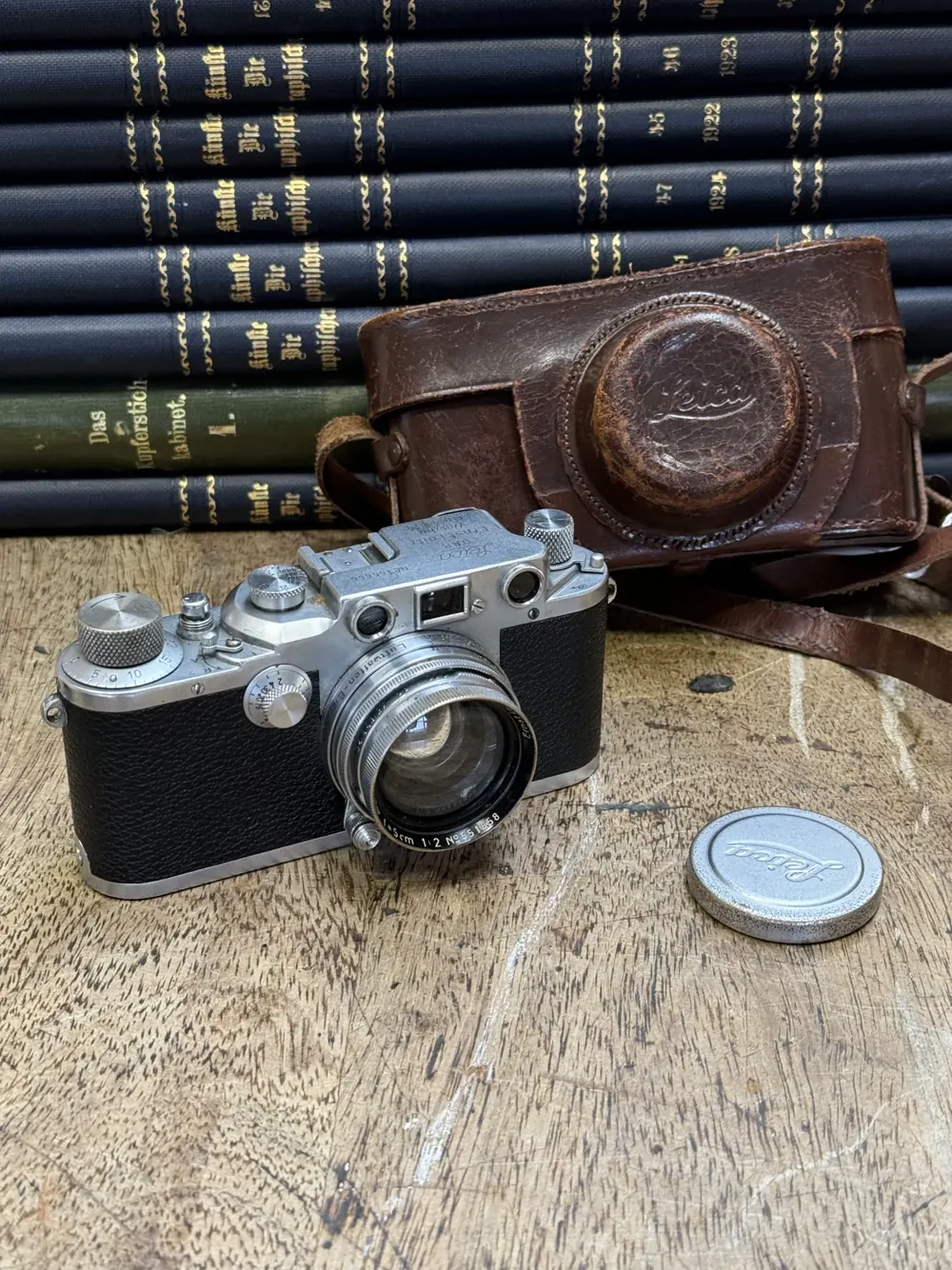
Want one? See the screw-mount Leicas for sale.
The M3 and the bayonet
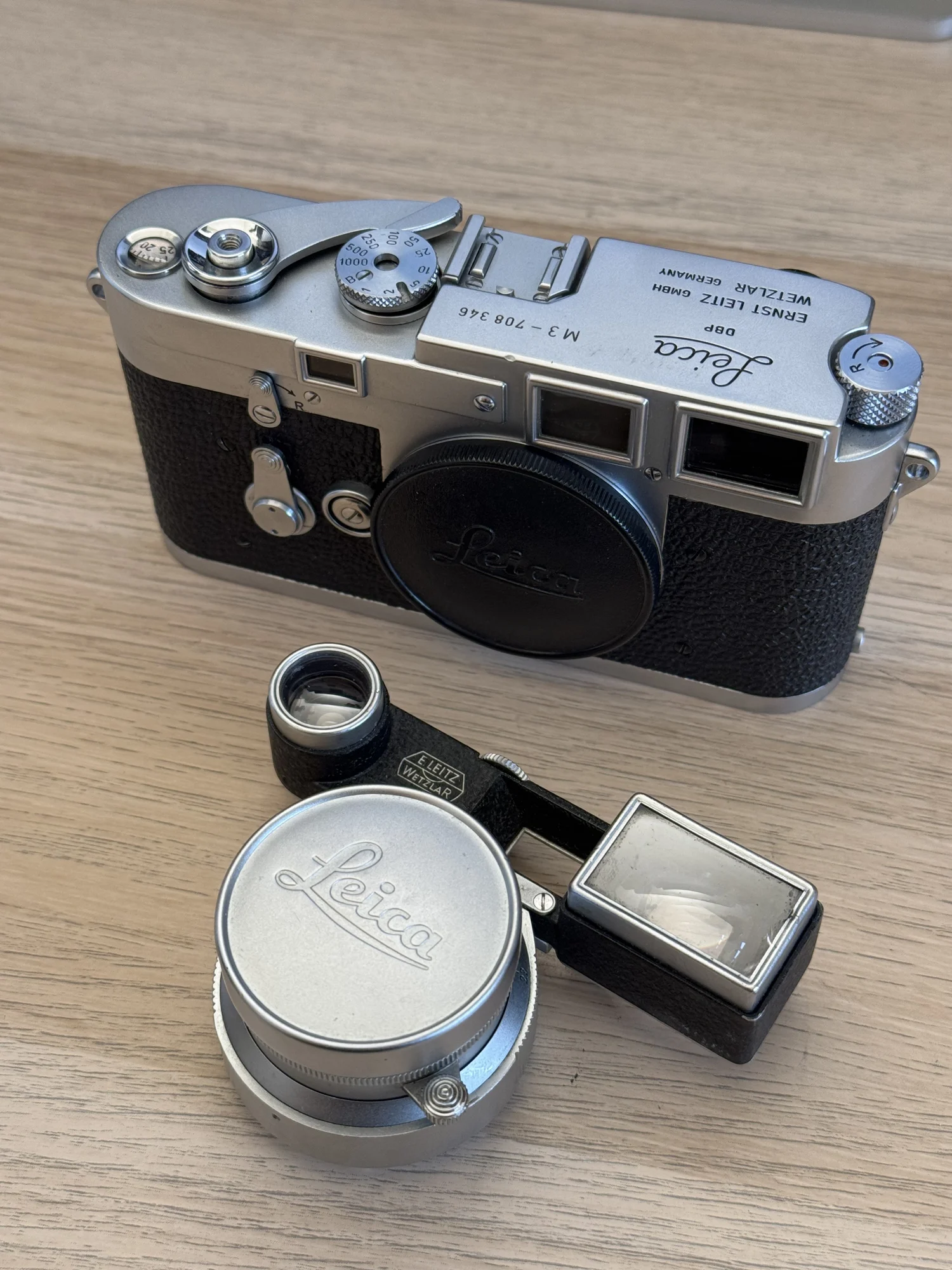
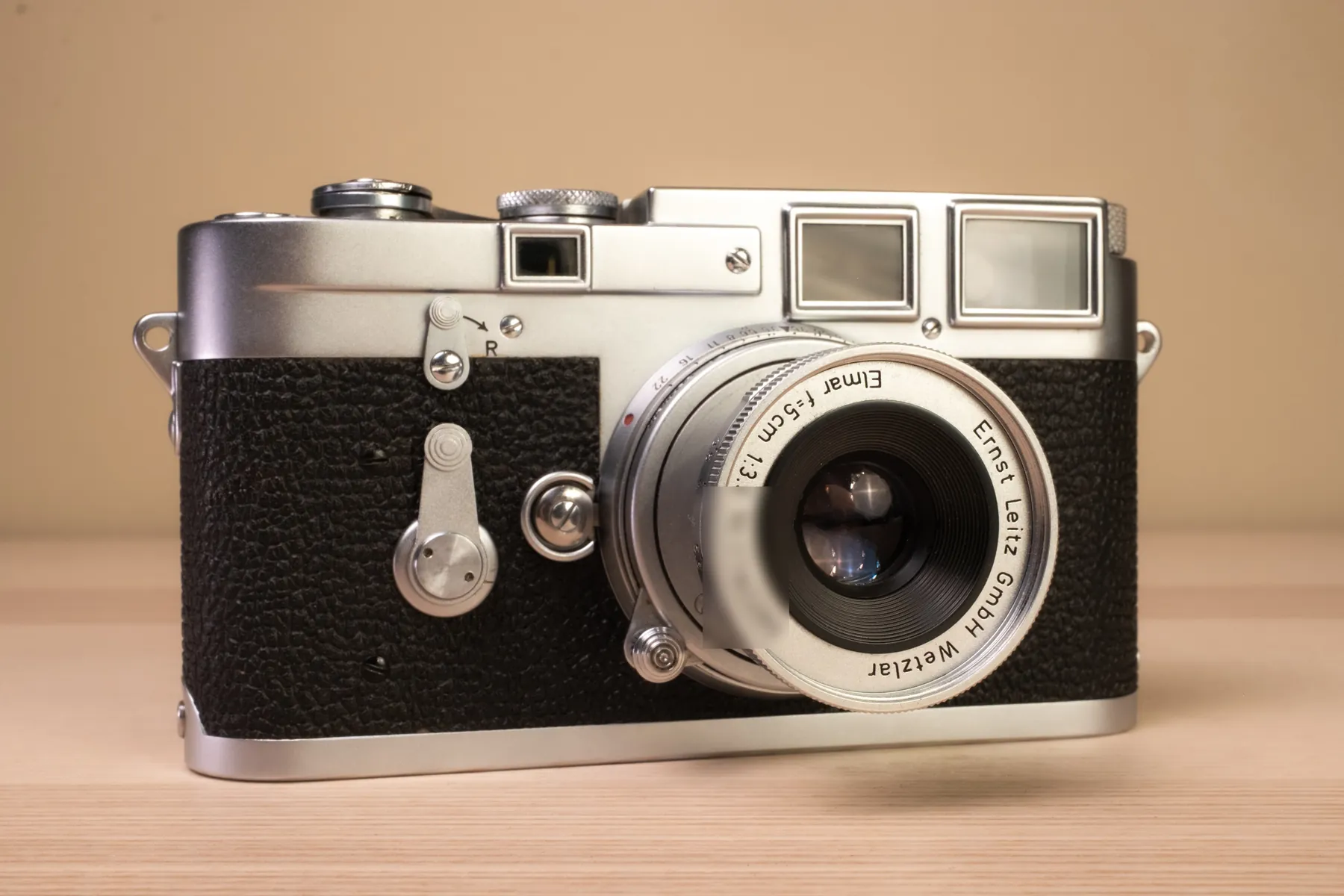
In 1954, at Photokina in Cologne, Leitz showed the Leica M3. It changed three things at once. Lenses now went on with a quick bayonet instead of a thread. Framing and focusing moved into one viewfinder, with the rangefinder patch in the middle. And the finder showed bright frame lines for each lens, appearing automatically as the lens was mounted.
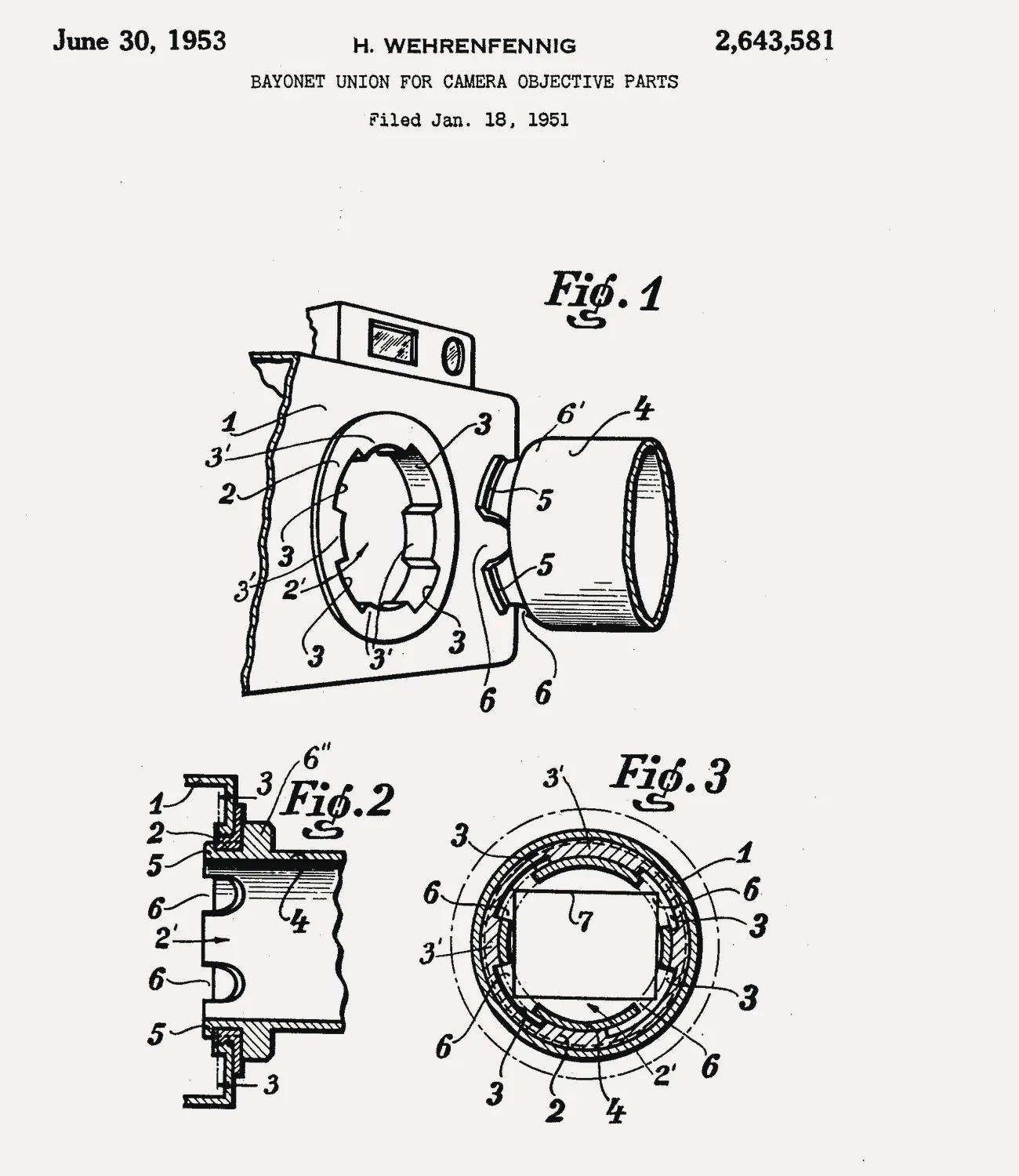
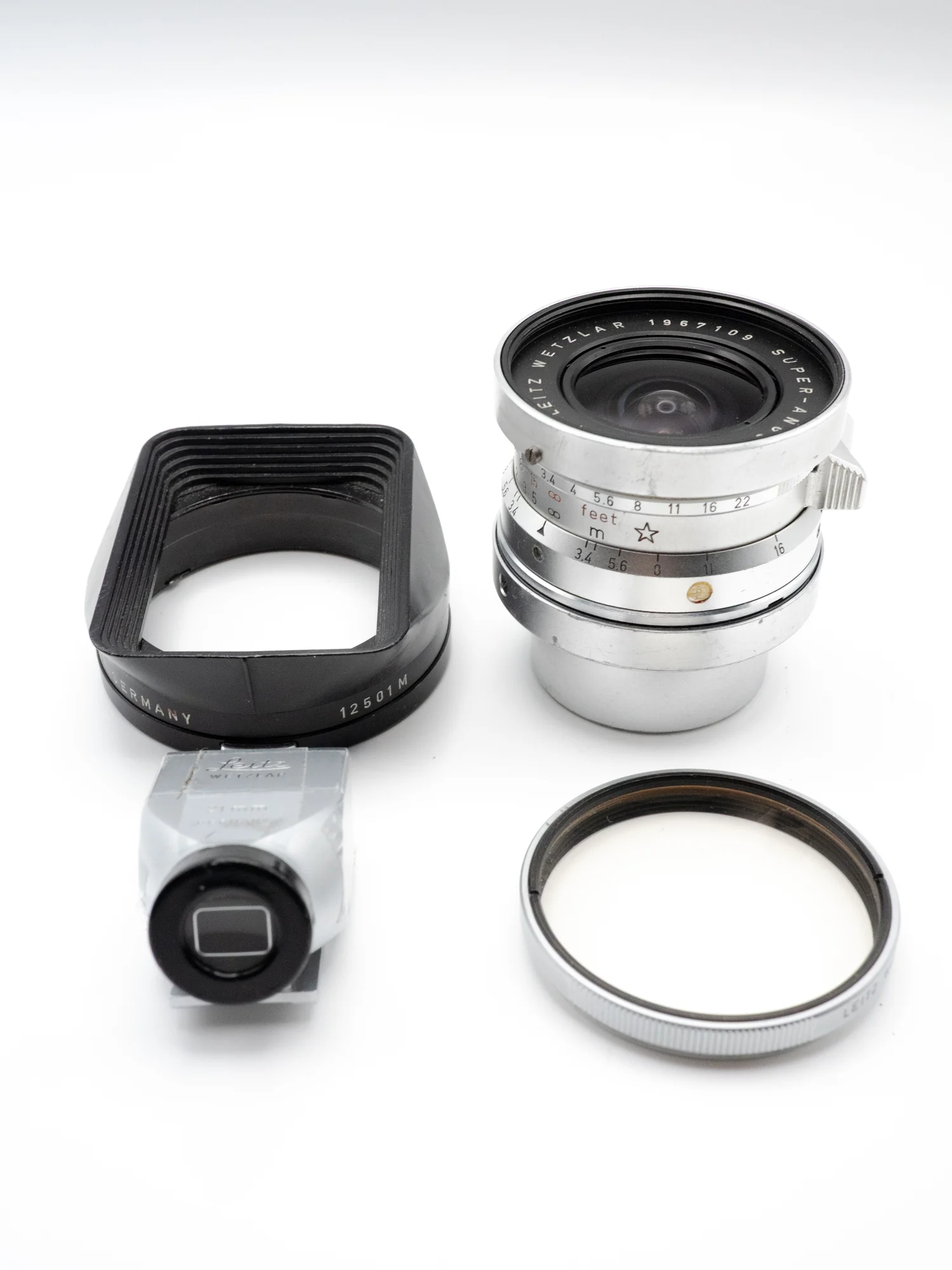
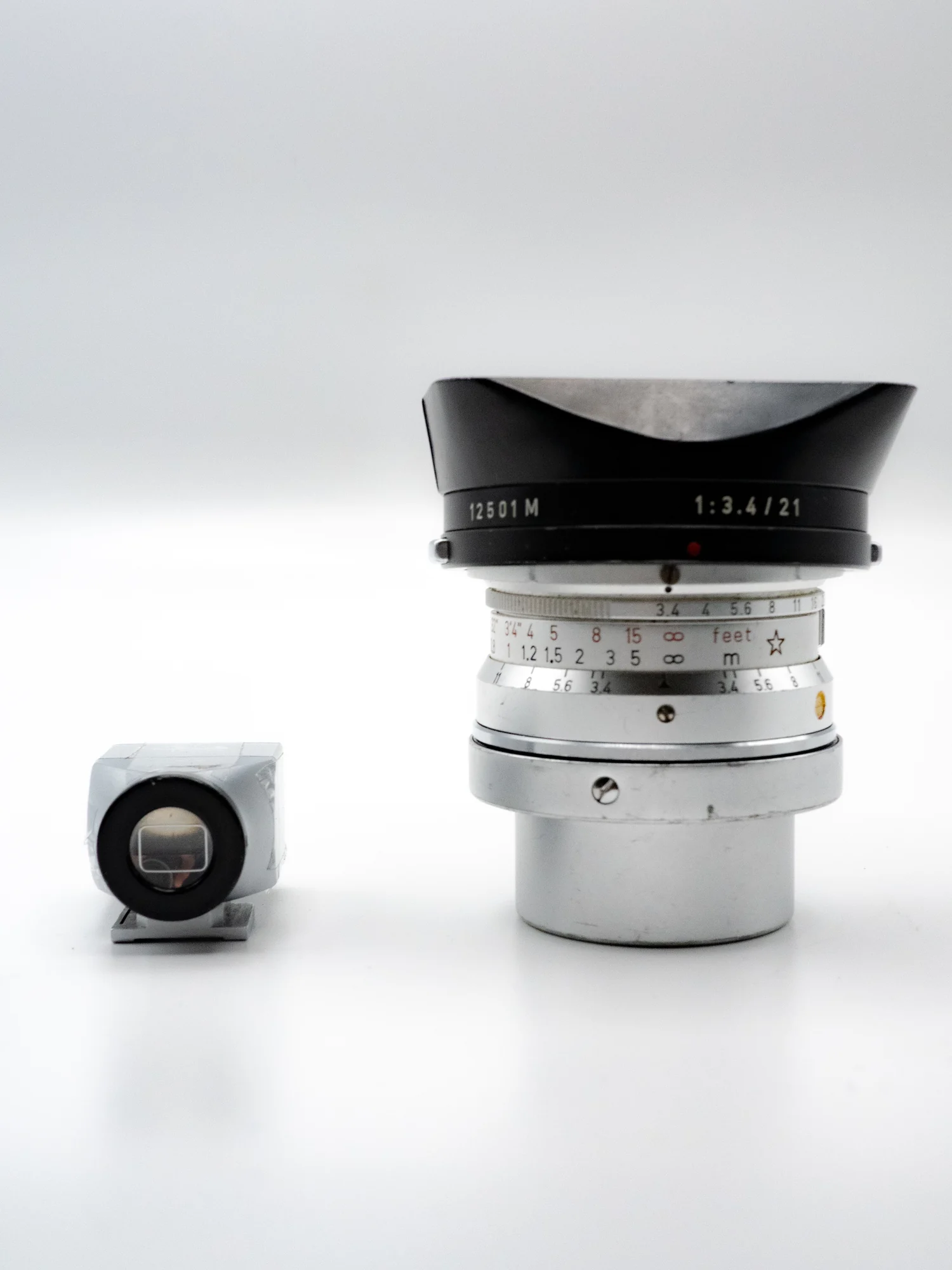
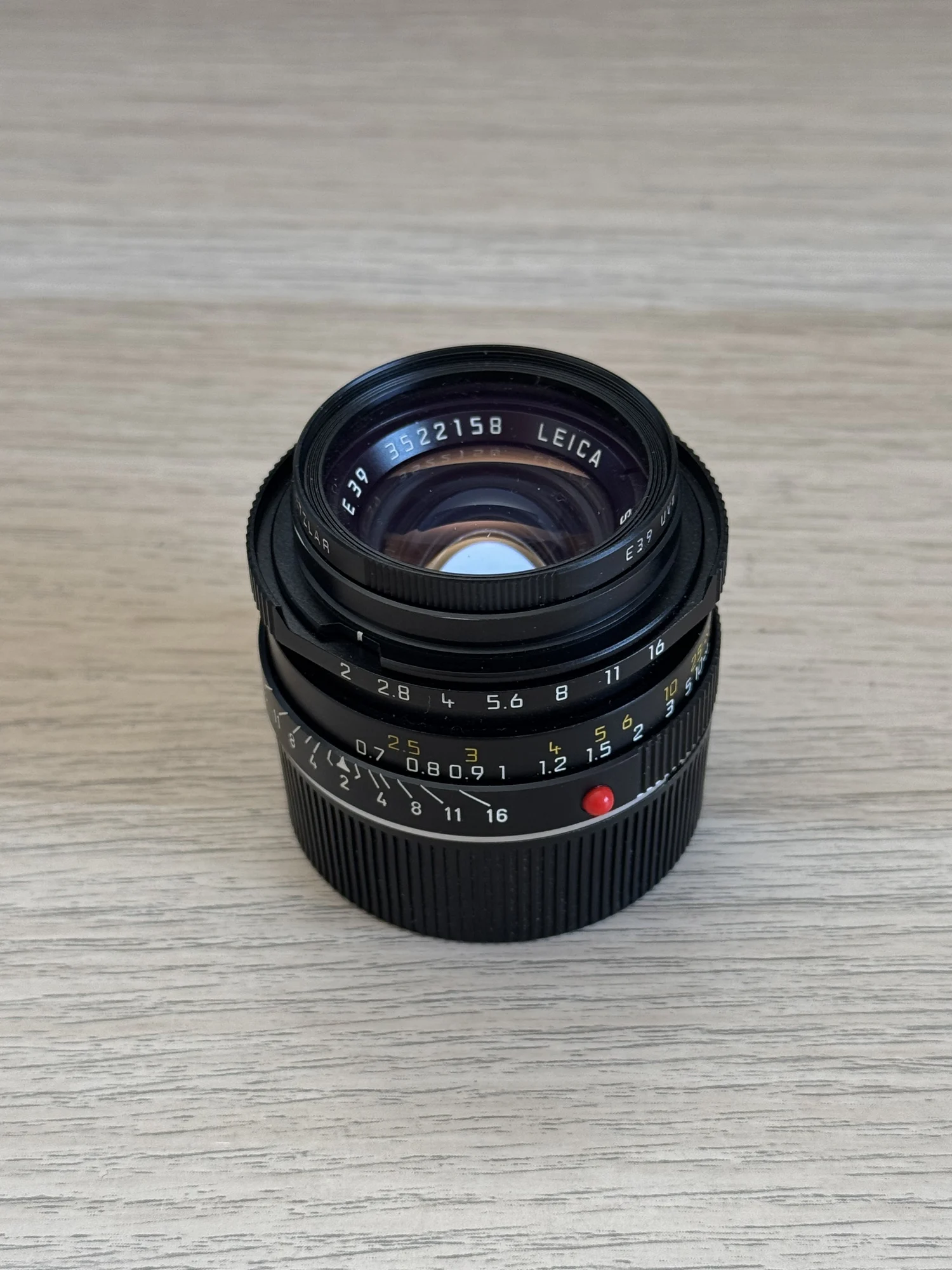
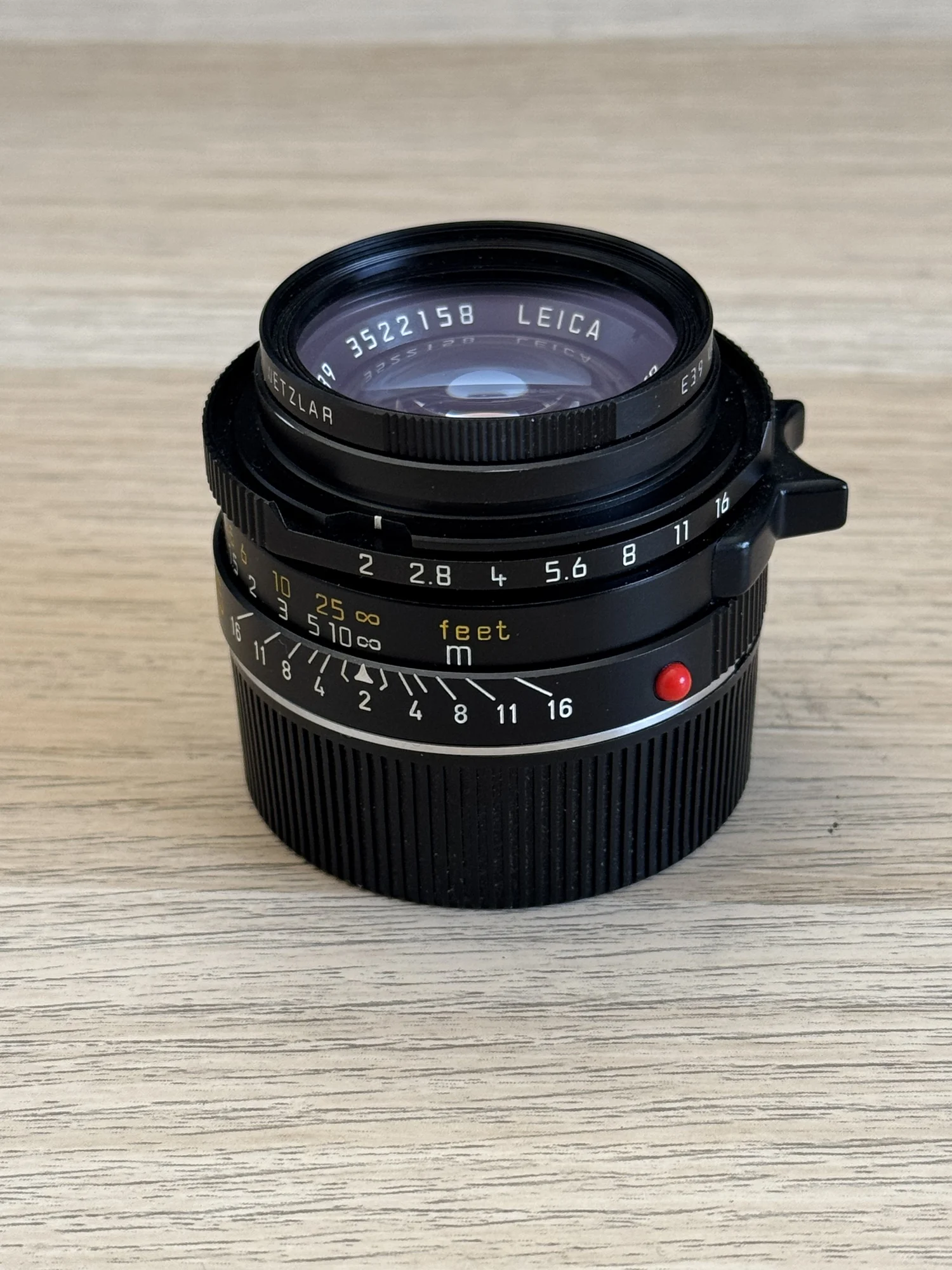
The M3's finder, at 0.91x, is still the largest of any M. Its bayonet is the one Leica uses today: almost every M lens made since 1954 fits a current M body, film or digital, and a new lens fits an M3.
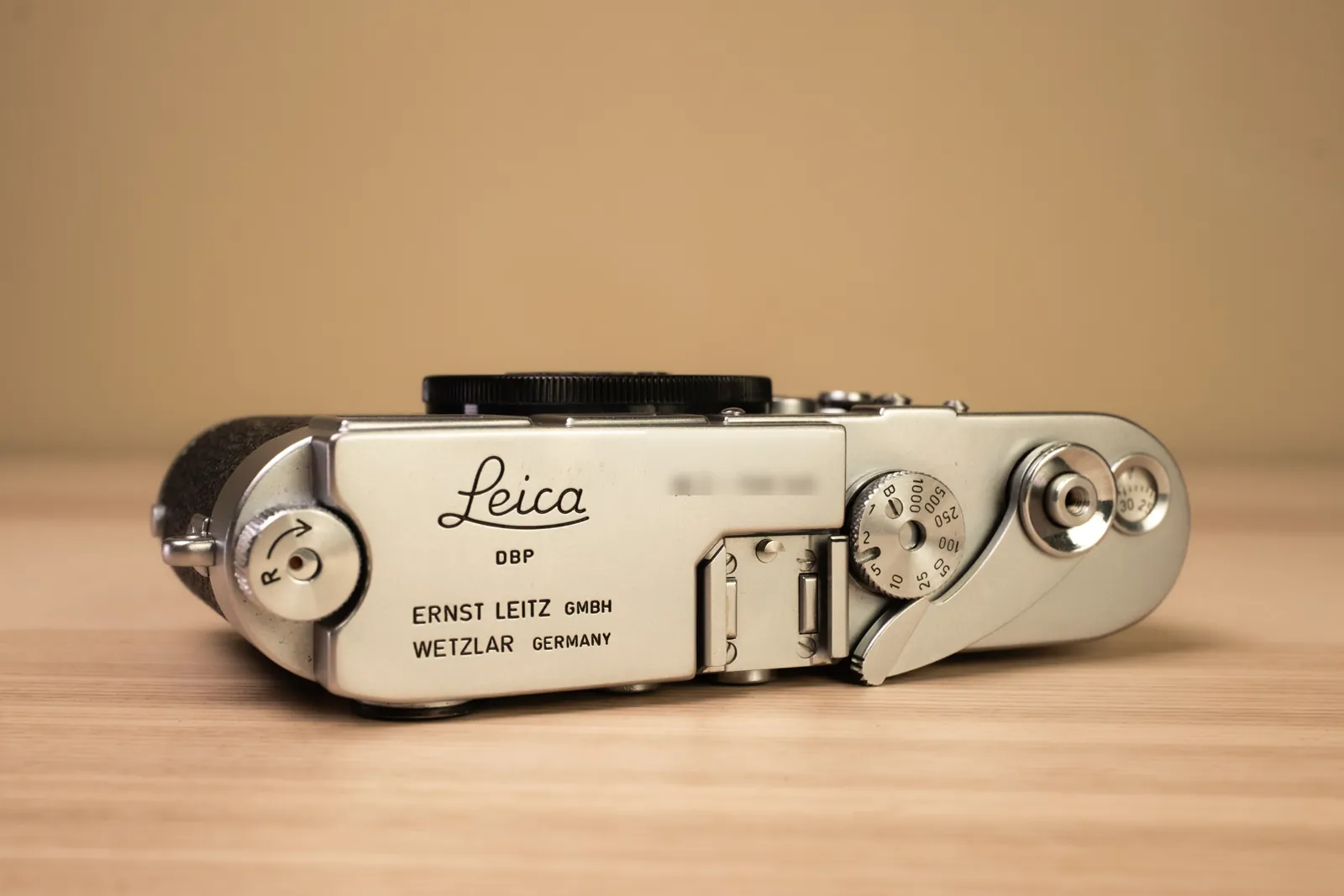
The film M cameras
| Model | Year | What changed |
|---|---|---|
| M3 | 1954 | The first M; 0.91x finder, frame lines for 50, 90 and 135mm |
| M2 | 1957 | A 0.72x finder that shows 35mm, and a simpler build |
| M4 | 1967 | Faster loading and an angled rewind crank |
| M5 | 1971 | The first M with a through-the-lens meter, in a larger body |
| CL | 1973 | A compact M-mount camera with a meter, made with Minolta in Japan |
| M4-2 / M4-P | 1977 / 1980 | M4 bodies made largely in Midland, Canada; the M4-P adds 28 and 75mm frame lines |
| M6 | 1984 | A light meter in the classic M body |
| M6 TTL | 1998 | TTL flash metering |
| M7 | 2002 | Aperture-priority automatic exposure through an electronic shutter |
| MP | 2003 | A fully mechanical camera with a meter, built like the early Ms |
| M-A | 2014 | A fully mechanical camera with no meter at all |
| M6 (re-issue) | 2022 | The M6 back in production |
The 1970s were hard. Japanese SLRs were cheaper and faster, and Leitz looked for ways to cut costs: the M5 and the CL, production in Canada, simpler M4 variants. The M6 in 1984 settled it: a classic M with a meter. About 175,000 were made by 2002, and it is the M most people look for first today.
From Leitz to Leica
The company goes back further than the camera: to an optical workshop founded in Wetzlar in 1849, which Ernst Leitz I took over in 1869 and ran under his own name. In 1986 the photographic business took the name of its best-known product and became Leica. In 1988 it moved to a new factory in Solms, near Wetzlar, and in 1996 it was listed as Leica Camera AG. In 2014, a hundred years after the Ur-Leica, it moved back to Wetzlar, to the new Leitz Park, where cameras and lenses are still made.
Digital M cameras
The M8 of 2006 was the first digital M, with a sensor smaller than a 35mm frame. The M9 of 2009 was the first full-frame digital M; some M9 sensors later developed corrosion under the cover glass, which is now a routine repair. Later models moved to CMOS sensors, the M11 of 2022 among them, and in 2025 the M EV1 replaced the rangefinder with an electronic viewfinder. All of them take the same lenses as the M3. Leica still makes two film Ms as well: the M6, back in production since 2022, and the M-A.
What this history means when you buy
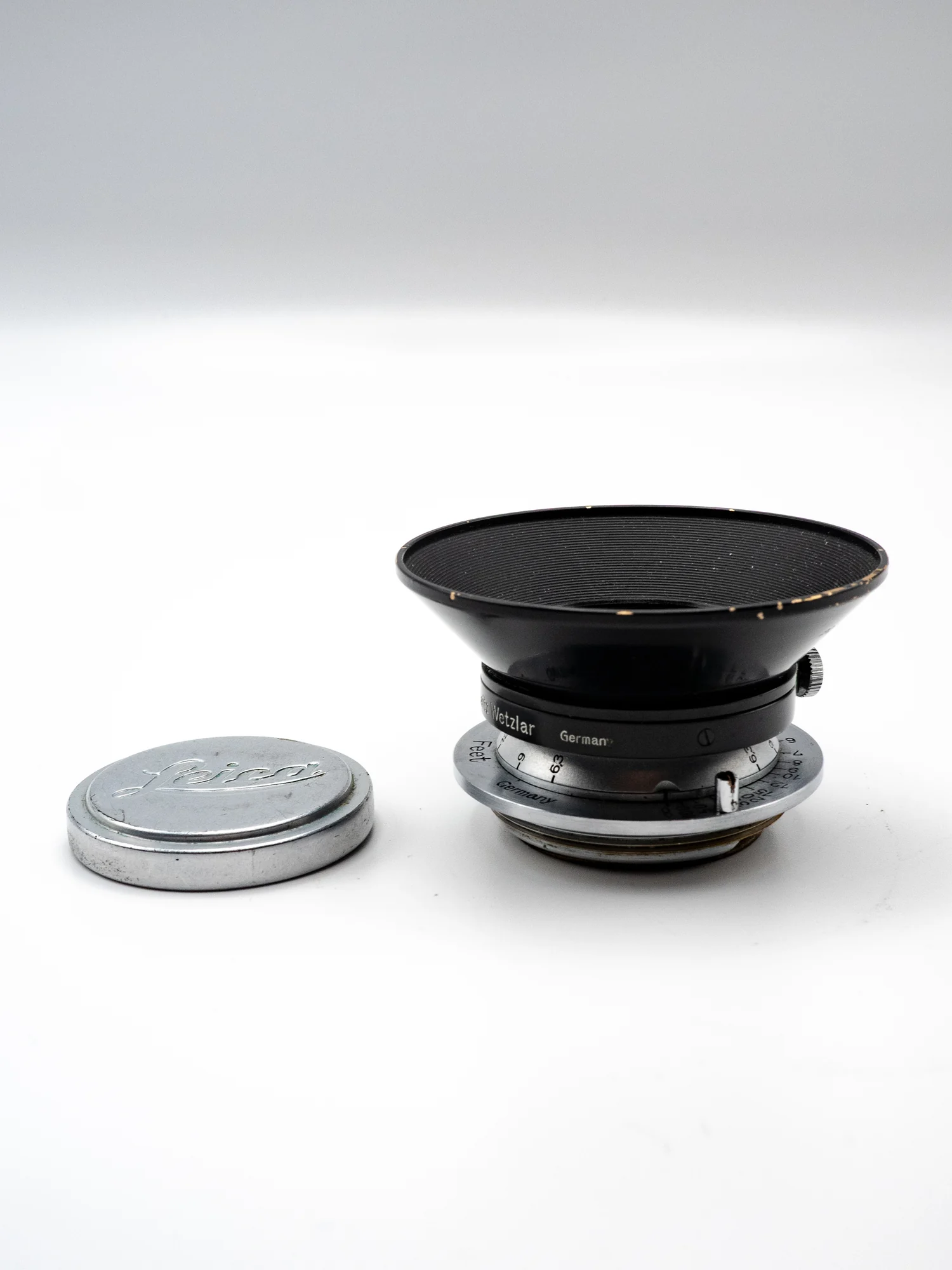
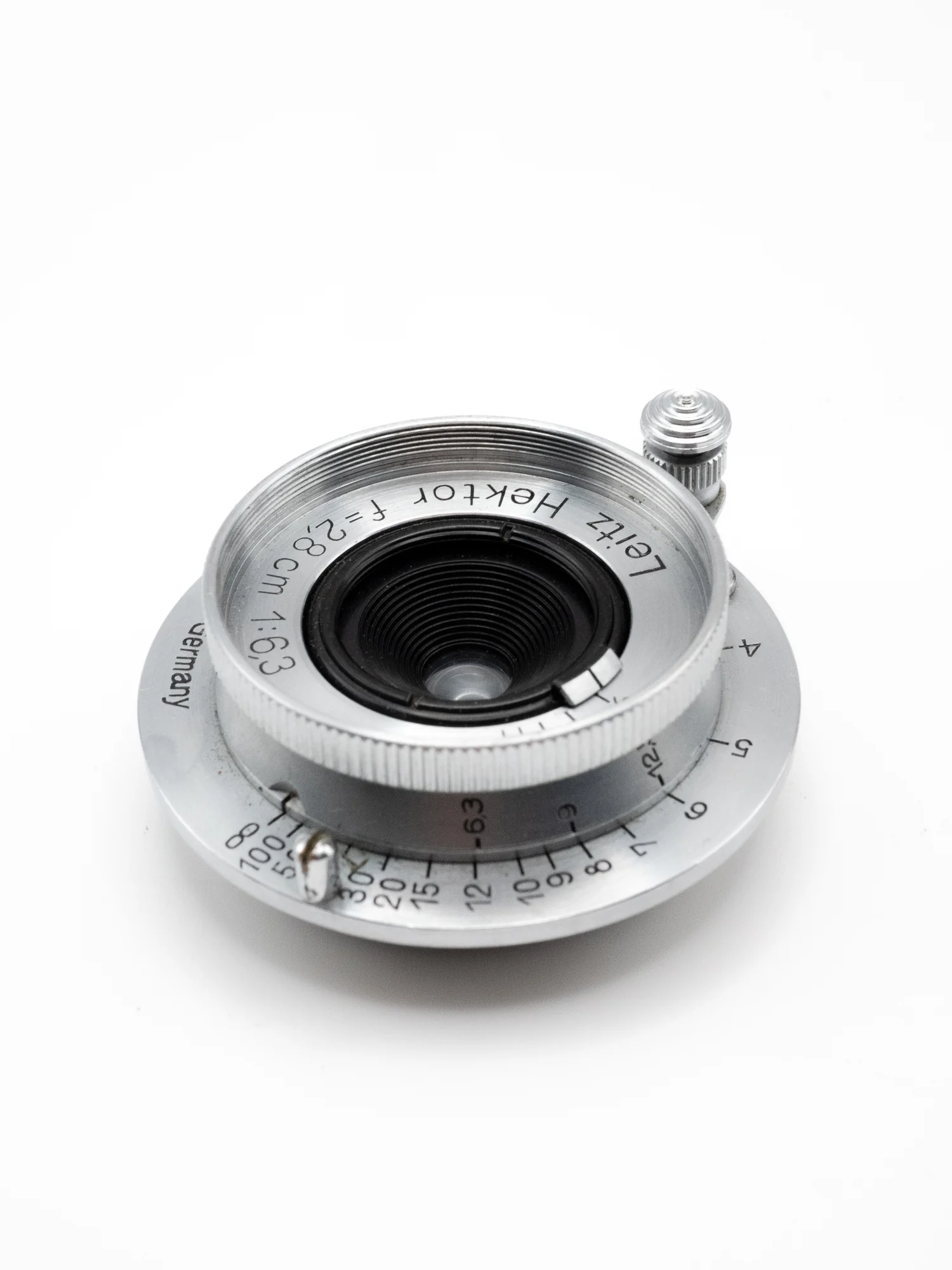
- Lenses carry across the years. Almost any M lens from 1954 on fits a current digital M. Screw-mount lenses fit an M body through an adapter that also brings up the right frame lines.
- The year tells you what to check. A screw-mount Leica is 70 to 100 years old: look at the curtains, the slow speeds and the rangefinder. An M3 or M2 may have a hazy or fading viewfinder. An M6 needs a battery only for its meter.
- Choose by how you shoot, not by age. For a first Leica, an M with a meter, such as the M6, is the easiest. For the smallest camera that takes Leica lenses, a IIIf or IIIg.
For the hands-on side, read our Leica M guide. To buy, see used Leica cameras and lenses, the Leica M shelf and the screw-mount shelf.
Picture credits
The Ur-Leica: photo by Leica (Leica Microsystems), CC BY-SA 2.0 DE, via Wikimedia Commons. The bayonet drawing is from H. Wehrenfennig and Ernst Leitz, US Patent 2,643,581 (1953), public domain, recoloured. All other photographs are our own.