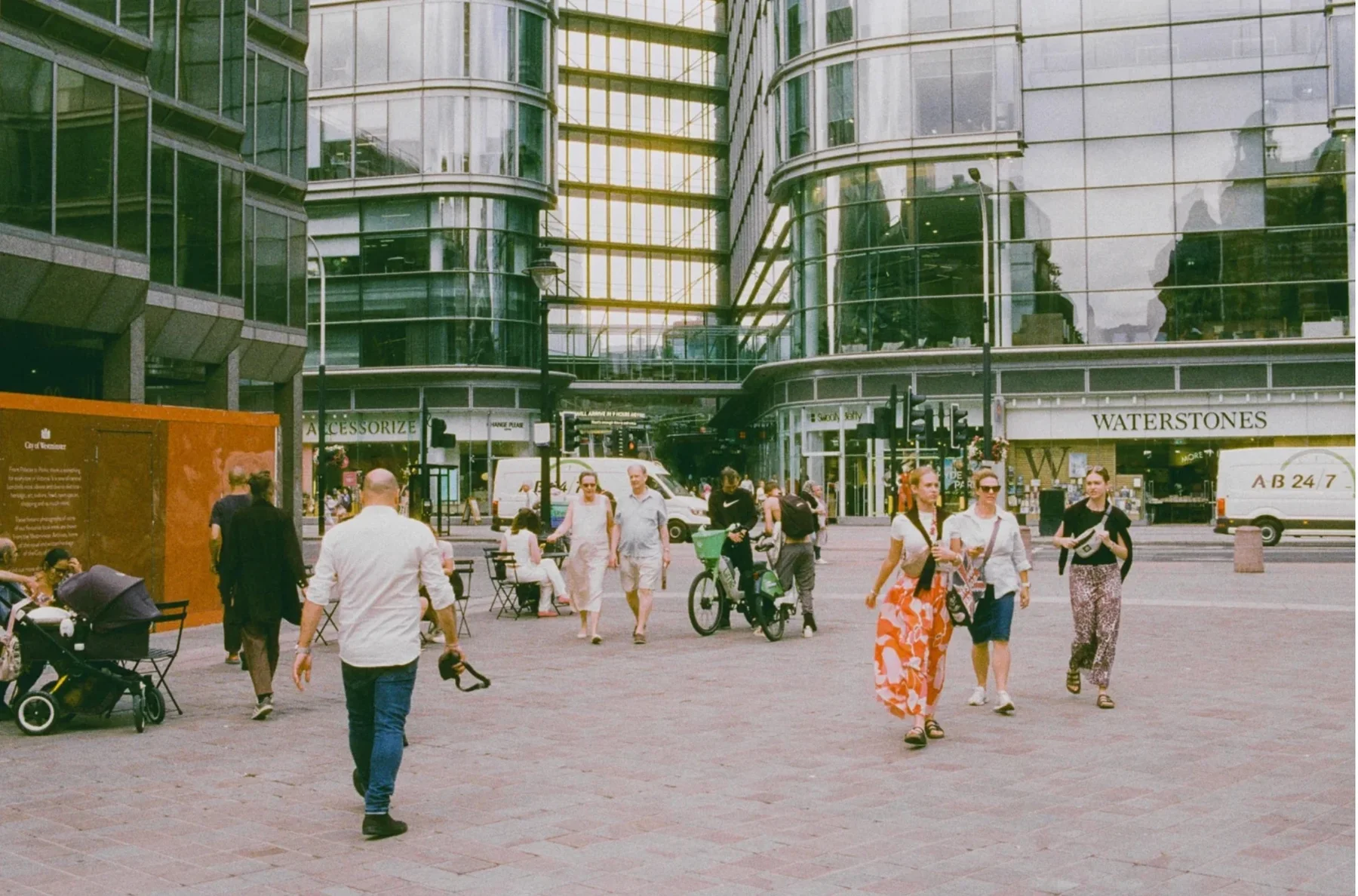
Colour negative is the everyday film. It forgives overexposure, any lab can process it, and it suits people, travel and daylight. Seventeen colour negative stocks are sold in 35mm in the UK. With colour the first question is not grain but what the colour looks like, so that is where this guide starts.
How do colour negative films differ?
We place each stock on two scales: warm to cool and subtle to saturated. Fujifilm leans cool and green; Kodak leans warm and yellow-red. That is the biggest divide, and the real reason most people pick one brand. Within each maker, professional lines are more subtle than consumer lines: a pro stock leaves room for editing, a consumer stock looks finished straight off the scan.
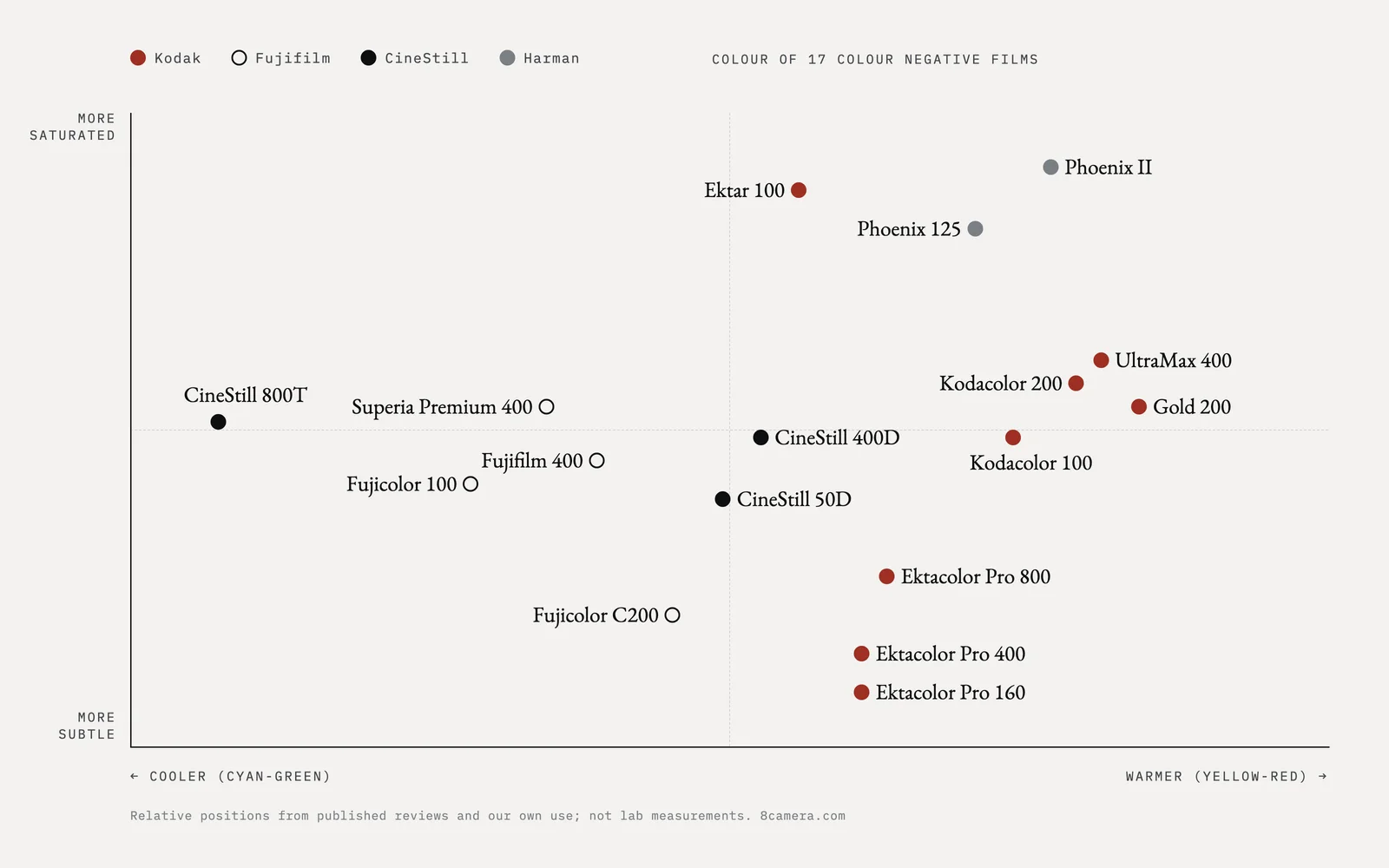
The bottom-left corner is empty: no current film is both cool and subtle. If you want that look, take a Fujifilm film and tone it down, or do it in the edit.
All seventeen films
| Film | ISO | What it looks like |
|---|---|---|
| Kodak Ektacolor Pro 160 (formerly Portra 160) | 160 | The most subtle; skin tones come first |
| Kodak Ektacolor Pro 400 (formerly Portra 400) | 400 | The all-rounder |
| Kodak Ektacolor Pro 800 (formerly Portra 800) | 800 | Holds skin tones in low light |
| Kodak Ektar 100 | 100 | The most saturated and finest-grained colour negative; a landscape film |
| Kodak Gold 200 | 200 | That classic warm yellow |
| Kodak Kodacolor 100 / 200 | 100 / 200 | A consumer line launched in 2025 |
| Kodak UltraMax 400 | 400 | Warm, punchy, with visible grain |
| Fujifilm 400 | 400 | Fujifilm's current mainstream 400, leaning cool |
| Fujicolor C200 | 200 | A cheap everyday 200; sold in the UK as Fujifilm 200 |
| Fujifilm Superia Premium 400 | 400 | The strongest cyan-green; sold mainly in Japan |
| Fujicolor 100 | 100 | The coolest of all, openly green; sold mainly in Japan |
| CineStill 50D | 50 | Motion picture film with the remjet removed; very fine grain |
| CineStill 400D | 400 | The most versatile daylight CineStill |
| CineStill 800T | 800 | Tungsten-balanced; known for red halation around lights at night |
| Harman Phoenix II | 200 | Saturated to the point of unreal, coarse grain |
| Harman Phoenix 125 | 125 | A stop slower than Phoenix II; needs plenty of light |
Which colour film should I buy?
- People: Ektacolor Pro 400. It handles almost anything. For controlled light, go down to 160.
- Landscape: Ektar 100. Strong colour and the finest grain, but it pushes skin towards red, so it is not an all-rounder.
- First roll, no editing: Gold 200. Warm, forgiving and hard to get wrong.
- Plants and water: Fujifilm's cooler, greener palette suits them. It is less kind to skin, which can look cool and slightly grey-green.
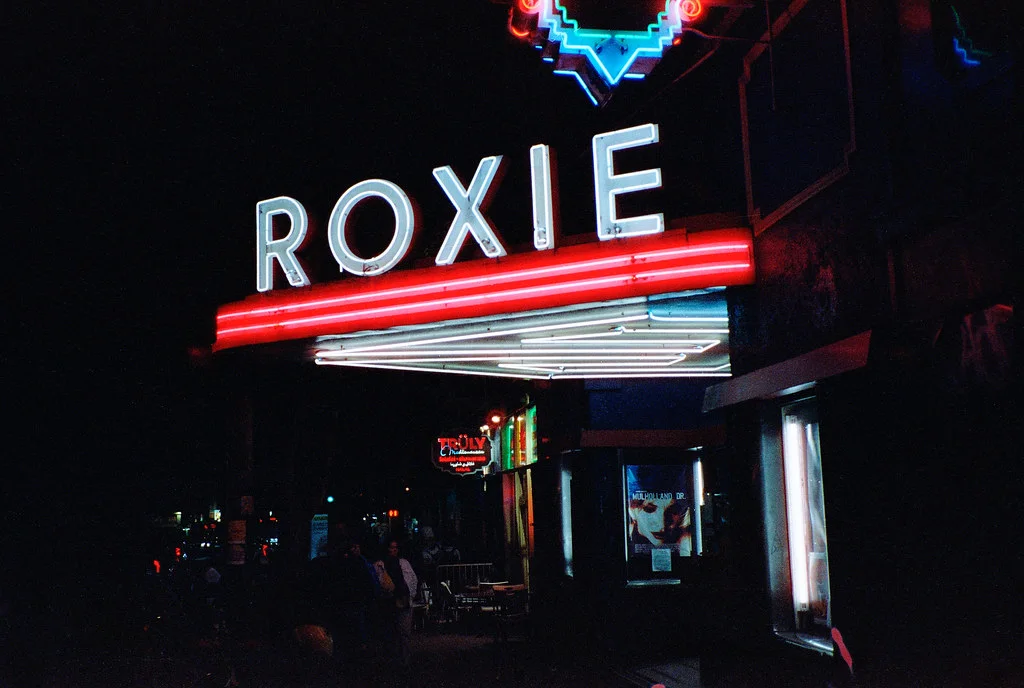
- Night, neon and red halation: CineStill 800T. In daylight it turns blue, so use an 85 (orange) filter.


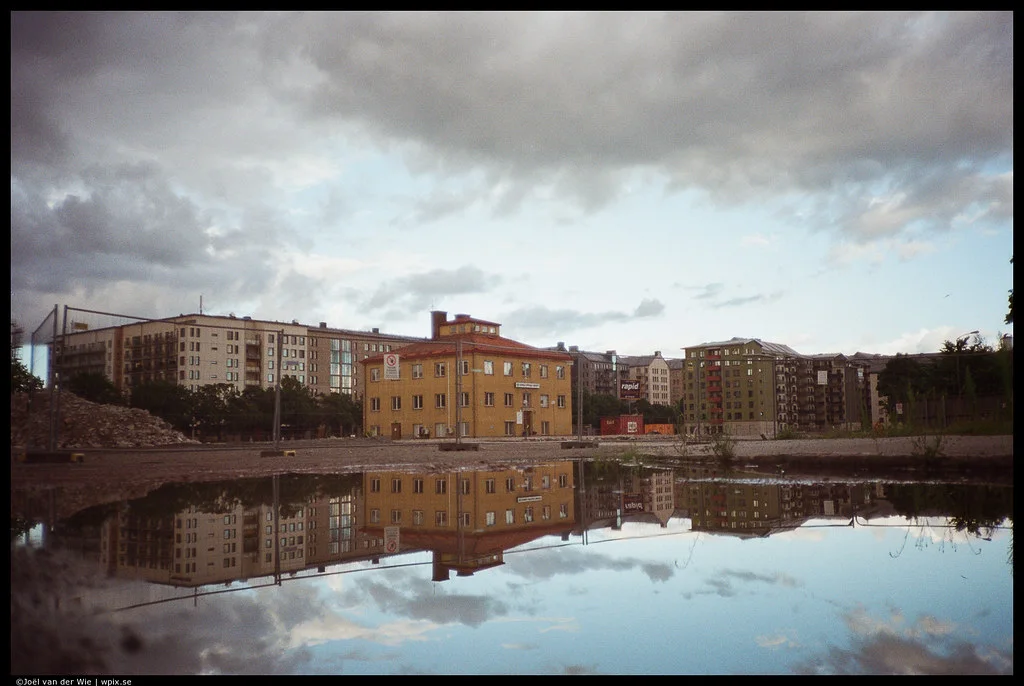
Choose the speed for the light you will actually shoot in: 100–200 in sun, 400 on overcast days and indoors, 800 only after dark. A faster film is not better in good light; a slower one gives finer grain and cleaner colour.
What happened to Portra?
In March 2026 Eastman Kodak took back distribution of its film from Kodak Alaris. Films whose trademarks sit with Kodak Alaris had to be renamed: Portra 160, 400 and 800 are now Ektacolor Pro 160, 400 and 800, and T-MAX became Ektapan. The emulsions are the same; only the distributor differs. Both boxes are on sale while old stock runs out, and the new name is usually the cheaper box.
| Old box | New box | UK price, October 2026 |
|---|---|---|
| Portra 160 | Ektacolor Pro 160 | £18.00 → £15.95 |
| Portra 400 | Ektacolor Pro 400 | £23.00 → £19.95 |
| Portra 800 | Ektacolor Pro 800 | £25.00 → £21.95 |
| ColorPlus 200 | Kodacolor 200 | £12.50 → £10.49 |
Prices are single 36-exposure rolls at one UK retailer on 12 October 2026 and change often. Kodak says only that Kodacolor 100 and 200 are a sub-brand of existing Kodak films and has not confirmed which, so treat any claimed match as a guess.
Fujifilm colour films
Fujifilm keeps cutting its range: Pro 400H and Pro 160NS ended in March 2022, and UK supply of what remains is patchy. If a Fujifilm stock you want is in stock, buy it.
What is a remjet-removed (CineStill) film?
Kodak Vision3 motion picture film has a carbon anti-halation backing, remjet, that ordinary C-41 lines can't remove. CineStill takes it off at the factory, so the film processes as ordinary colour negative. Without it, light around bright sources scatters back through the emulsion: that is the red glow. These films go through C-41, but should not be sent for ECN-2. Cine film that still has its remjet is different: it needs ECN-2, and in C-41 it contaminates the lab's chemistry, so ask before you buy.

What about Harman Phoenix?
Harman Phoenix is a colour negative that Harman, Ilford's parent company, built from scratch in Britain, and Harman itself calls it experimental. Latitude is narrow and grain is coarse, but the intensity of colour is something no one else offers. Try it when you want colour that isn't normal, not as an everyday film.
How forgiving is colour negative film?
Colour negative forgives overexposure far better than underexposure. Underexposed frames go purple and grainy; overexposed frames lean pink-yellow but keep detail for a stop or two. Beyond the range at either end, colour goes out of balance and grain shows.
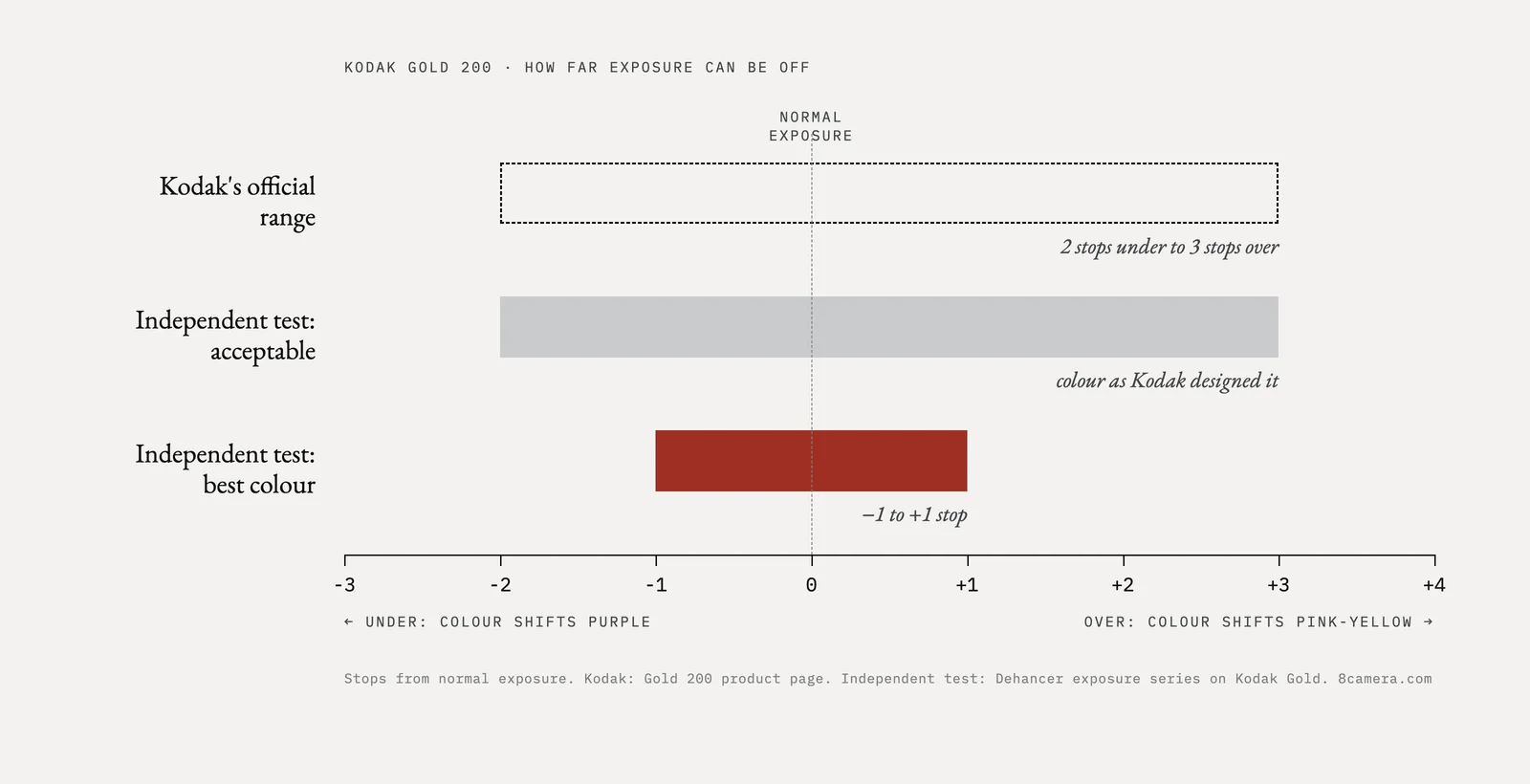
When in doubt, give half a stop to a stop more. Ektar 100 is the exception: Kodak gives no latitude figure for it, and reviewers disagree, so shoot it at exactly ISO 100.
Developing and scanning
All colour negative film is developed in C-41, and the process varies little between labs. The scan is where half the colour is set: the same strip of film on a different scanner or with different presets can look very different. Before you blame the film, ask the lab three things: can automatic colour correction be turned off, what file size and format you will get, and whether one setting is used for the whole roll.
Choosing between colour, black and white and slide in the first place? Start with How to choose 35mm film. Loading your first roll? Read Your first roll of film.