

On our bench, most faults on a Hasselblad 500C, 500C/M, 501C/501CM or 503CX/503CW come from five places: a body and lens (or back) that have fallen out of step, worn parts in the rear blinds, perished foam in the body and at the dark slide, film backs that space frames unevenly or leak light, and C and CF lens shutters whose lubricant has thickened. Many apparent jams are not faults at all, as Hasselblad's own manuals explain. The rest is bench work: a body overhaul, a lens shutter service or a back service, each quoted separately. Current prices and turnaround are on our repair prices page.
This guide covers what goes wrong and how it is put right. For the differences between bodies, lenses, backs and screens, see our Hasselblad 500 series guide and V lenses guide.
Why 500-series cameras fail the way they do
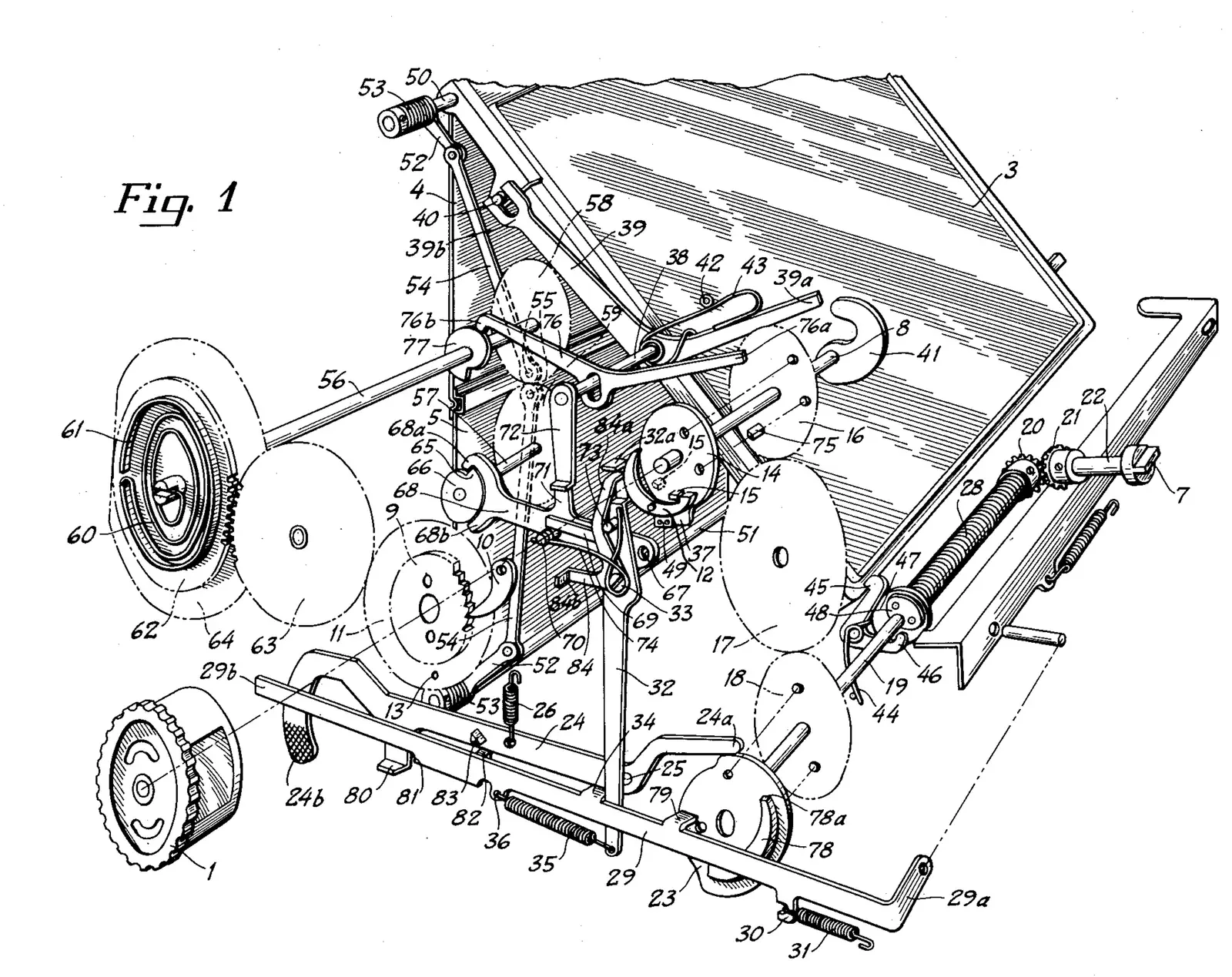
A 500 is three mechanisms that have to agree. Hasselblad's 503CX and 500C/M instruction manual says that one full turn of the winding crank "winds the camera, cocks the shutter and transports the film one frame". The patent behind the design, filed in 1958 by Björn Hedén and assigned to Victor Hasselblad, describes the same single movement, which sets the shutter, feeds the film and lowers the mirror, after which a screening device (the two rear blinds) covers the film opening. So the lens shutter, a Synchro-Compur in C lenses and a Prontor in CF and later lenses, is cocked by the body, and a fault in any one part stops the whole camera.
Age does the rest. Hasselblad's 501CM and 503CW manual asks owners to return the camera "for occasional checking and preventive maintenance", and recommends check-ups every six months for a camera in constant, intensive use. Hasselblad's service manual for the 500 and 503 bodies specifies grease and oil at dozens of points, and in most cameras for sale that lubricant is now decades old.
Common faults at a glance
| Symptom | Usual cause | Try it yourself? | The repair |
|---|---|---|---|
| Release won't press | Dark slide in, film finished, T lock set or camera not wound | Yes, see below | None needed |
| Lens won't come off or go on | Body or lens not wound, or body pre-released | Yes, see below | A broken part if winding doesn't free it |
| Mirror still up after winding | Mirror spring or drive train | No | Body overhaul |
| Black crumbs on the mirror | Perished foam in the body | No | Foam replaced, screen height reset |
| Rear blinds slam, stick or half-close | Worn damping, cracked blind, dry mechanism | No | Body overhaul, sometimes a new blind |
| Fogging from the dark slide side | Worn light trap foam | No | Back serviced |
| Uneven spacing or overlaps | Loading, or old grease in the back's advance | Check the loading | Back serviced |
| Slow speeds drag, aperture lazy | Thickened lubricant in the lens shutter | No | Lens shutter service |
A jammed Hasselblad: put it back in step first
Hasselblad's manuals list most "jams" as operating states. The troubleshooting table in the 501CM and 503CW manual gives these causes and remedies:
- The release button won't press: the magazine slide is still in, the film is finished, or the camera hasn't been wound.
- The lens won't come off: the body is pre-released or released. Complete the release and wind the camera.
- The lens won't go on: the lens itself is in the released position, or the body is pre-released or released. Wind the lens, or complete the release and wind the body.
- There's no image on the screen: the camera is pre-released or released; the mirror is up. Complete the release and wind.
To wind a lens fired off the camera, the same manual says to turn the coupling slot on its back clockwise with a small coin until it locks, then line up its red index with the body's. The 503CX and 500C/M manual adds two more that catch people out. With the time exposure lock at T, the crank can't be advanced until the lock is returned to O. And the red and white indicators on the body and back must match: if a red back meets a white body, or the reverse, the manual gives a short sequence to bring them back into step.
So before anything else:
- Take the back off and look at the rear blinds. They should be closed. Hasselblad's service manual warns technicians to "always check that the auxiliary shutter is closed before turning the winding knob", or the top blind can be damaged when the mirror comes down. Don't force the crank against a half-open blind.
- Check the T lock, the dark slide and the indicators.
- Wind the body until the crank stops, then try the lens again.
If it still won't wind or release, stop. On our bench, a camera still stuck after these steps usually has a broken spring or a part out of position, and forcing the lens or crank is what makes a routine repair expensive. Bring or post it as it is.
To avoid jams, wind straight after every exposure, and store the camera wound with the rear cover on. The 501CM and 503CW manual recommends replacing the rear cover "to protect the auxiliary shutter" whenever the body is stored without a back.
Mirror not returning and perished foam
On a 500 the mirror stays up after an exposure until you wind; that is the design, and Hasselblad's manual lists "no image on the focusing screen" as a camera that simply needs winding. It is a fault when a full wind does not bring the mirror down. In Hasselblad's service manual the mirror has its own spring and catch, and its travel and 45° angle are set with special gauges; on our bench, a mirror that stays up after winding means opening the body.
Foam is the other mirror-box problem. Hasselblad's service manual lists foam plastic pads in the body shell and foam dampers glued to the rear plate where the two blinds meet. Foam of that age crumbles. On our bench, black crumbs on the mirror or the focusing screen are the usual first sign, and the mirror foam and seals are among the most common jobs we do on a 500.
This is not a home job. The service manual's procedure removes the focusing screen frame and parts of the mechanism, and afterwards the screen has to be set back to the right height: it is adjusted with four special screws, each turn moving it 0.35 mm, checked for flatness at all four corners and then set with a microscope and a focusing tester. If the screen sits even slightly wrong, what is sharp in the finder is not sharp on the film.
Rear blinds and their damping
The rear blinds, which Hasselblad's manuals call the auxiliary shutter, are two blinds covering the rear opening of the body. They open after the mirror rises and close after the lens shutter, and a strong spring drives them. Hasselblad's service manual fits a damping ring in the mechanism and tells technicians to check that "the auxiliary shutters close distinctively without slamming".
On our bench, the blind faults we see most are blinds that slam, close slowly or stop part-way, from dry or worn damping and old lubricant. A blind that has cracked is replaced rather than mended; Hasselblad's tool list includes a dedicated riveting jig for replacing the flaps, which tells you it is a proper workshop job.
Underexposed slow-speed frames are often technique: the 503CX and 500C/M manual says to keep the release pressed until the lens shutter has opened and closed, especially from 1 s to 1/15 s, or the rear blinds end the exposure early.
Film backs: A12 and the older Magazine 12
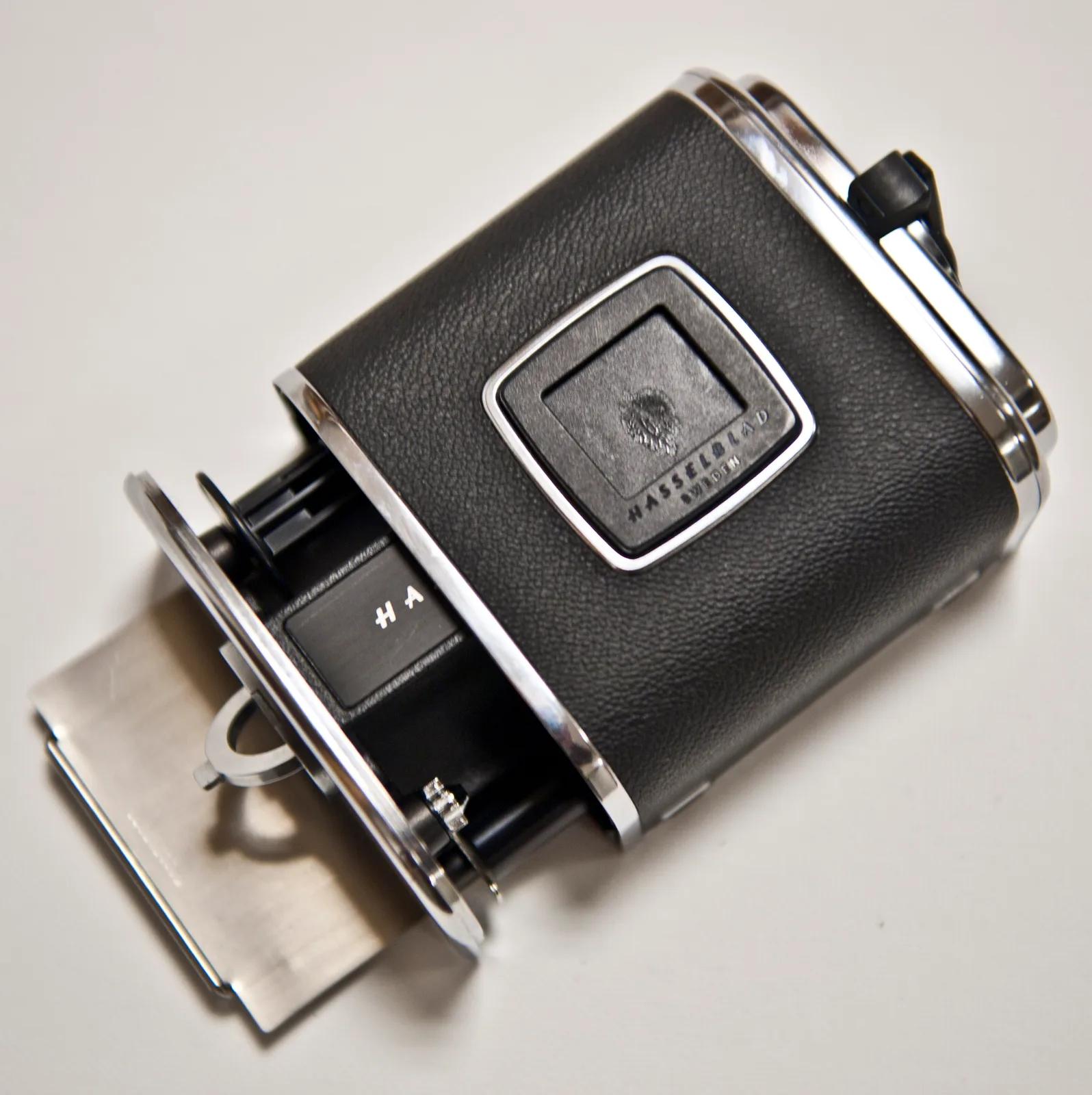
The older Magazine 12 is the back collectors call the C12; the A12 is its automatic successor. On our bench, the back is where we find the most faults, and the least obvious ones.
- Light leaks at the dark slide. The slot is sealed by a light trap that wears and perishes with age. On our bench, a worn or perished dark slide light trap is the most common cause of fogging we find on a 500 outfit, and we replace the trap as part of servicing the back; the 500 series guide shows where those leaks show on the negative.
- Uneven spacing or overlaps. Check the loading first. Hasselblad's A12, A16, A24 and A32 manual asks you to pay particular attention to which way round the roll goes and to the backing paper under the clamp bar, and to turn the take-up knob until the arrow on the paper lines up with the triangular index, "but no further". It also asks you to clean out the housing regularly, including scraps of paper from earlier rolls. If spacing is still uneven with correct loading, on our bench the cause is usually hardened grease in the advance mechanism, and the cure is stripping it out and re-lubricating, not spraying oil in.
- The crank binds when winding with a particular back. On our bench, that points to wear in the back's own gearing rather than the body.
- Counter faults. A counter that runs past 12 or won't reset is usually a spring in the counting mechanism, and it is put right when the back is serviced.
Lens shutters: C, CF and CFi
Buying checks are in the V lenses guide; these are the faults behind them, as we see them on the bench.
- Slow speeds that drag. Fire the lens at 1 second, wide open, and watch from the front. A second that runs long means the shutter wants cleaning and lubricating. On our bench this is the most common lens fault, and older C lenses show it most.
- Oily or lazy aperture blades. Stop down fully and press the depth-of-field preview: the blades should snap closed. Blades that creep shut mean the aperture needs cleaning.
- Flash out of sync. At the top speed with a flash, looking through the back of the body with the back removed, you should see a full round flash. Part of the blades means the shutter isn't opening fully at that speed, and the lens should be serviced before it is used for flash.
Our lens shutter service strips and re-times the shutter, cleans the blades and sets the speeds. Original C lenses are still worth servicing, but as our V lenses guide notes, some of their shutter parts have long been out of production, so a repair depends on what parts are available; a CF or later lens is simpler to keep running.
Focusing screens and winding cranks
Screens rarely fail outright. On our bench, the usual problems are scratches, dirt and the wrong screen for the finder, which the 500 series guide covers. If your negatives are consistently focused in front of or behind where the screen showed, suspect the screen height or the body's flange distance before the screen itself. Hasselblad's service manual sets both with dedicated gauges, so either is a bench adjustment.
Most winding faults are really faults elsewhere: a jam, a broken spring or a binding back. On our bench, a crank that won't turn with no back fitted points to the body or the lens (usually one or the other has jammed), and one that binds only with a particular back points to that back. On the 503CX and 500C/M the manual's crank comes off by pressing the latch in its centre and turning it counter-clockwise, preferably with the camera wound; on the 501C and 501CM the crank is fixed, so crank damage there is body work.
What a full service covers
Our repair prices page lists current prices, turnaround and warranty for each of these jobs. In outline:
| Job | What it covers |
|---|---|
| Hasselblad V body overhaul | The mechanism stripped, cleaned and re-timed |
| Hasselblad V lens shutter | Leaf shutter stripped and re-timed, blades cleaned, speeds set |
| Lens CLA | Helicoid re-greased, aperture blades cleaned, elements cleaned and collimated |
| Light seals and mirror foam | Perished seals and foam replaced |
| Certified service | Speeds measured at every setting, a test roll shot and developed, a written report |
| Film backs | Quoted after inspection |
Body, lens and back are separate mechanisms, so a full outfit is three jobs, not one. We inspect all three and tell you which actually need the work. The estimate is free, and you approve the figure before anything is done.
When a 500 isn't worth repairing
On our bench, most 500-series bodies are worth servicing. A few things change the sums:
- A damaged front key, usually from forcing a jammed lens. Hasselblad's service manual sets its position with a dedicated key angle gauge; a bent one is a parts job, not an adjustment.
- A cracked blind, which has to be replaced.
- Water damage, or a body someone else has already opened. We may decline these, because we can't give an honest estimate until we know what was done or how far corrosion has gone.
- A quote close to the price of a working body. We say so before any work starts, and you can choose to repair it or sell it to us.
What we check
On our bench, an estimate on a 500 covers:
- Rear blinds: open fully with the release held, close fully when it is let go, without slamming.
- Mirror: comes down on a full wind, sits firm, foam intact.
- Lens shutter: 1 second by eye and on the timer, top speed with flash, aperture closing cleanly.
- Film back: dark slide interlocks both ways, indicator and counter in step, light trap.
- Focus: the screen against the film plane.
Frequently asked questions
Why is my Hasselblad 500C/M jammed?
Usually it isn't broken but out of step. Hasselblad's manuals list the causes: the dark slide is still in, the film is finished, the T lock is set, the camera or lens isn't wound, or the camera is pre-released. Check that the rear blinds are closed, then wind the body fully. If it still won't move, stop and have it looked at.
Is it safe to force a stuck Hasselblad lens off?
No. On our bench, forcing is what turns a routine repair into an expensive one, because it can damage the front key in the body. If winding doesn't free the lens, bring or post the camera to a workshop as it is.
How much does a Hasselblad 500C/M service cost?
It depends on which parts need work: body, lens shutter and back are quoted separately. Our current prices are on the repair prices page, and the estimate is free.
How often should a Hasselblad 500 be serviced?
Hasselblad's 501CM and 503CW manual recommends occasional checking and preventive maintenance, and check-ups every six months for a camera in constant, intensive use. A camera that has sat unused for years needs a service before you rely on it.
Why does my A12 back overlap frames or leak light?
First check the loading against Hasselblad's instructions. On our bench, overlaps that persist come from hardened grease in the back's advance, and fogging from the dark slide side from a worn light trap. Both are fixed by servicing the back, not the body.
Should I store my Hasselblad wound or fired?
Wound, with the rear cover on if no back is fitted. A wound body and lens always go back together, and Hasselblad's manual recommends the cover to protect the rear blinds.
If your 500 is doing something on this list, tell us what it is doing for a free estimate, or read about Hasselblad repair and servicing. To start with one already through the bench, browse our Hasselblad collection.
The photograph at the top is our own. The Magazine 12 is by Hannes Grobe, CC BY-SA 3.0, via Wikimedia Commons, resized. The drawing is from B. H. Hedén, US Patent 2,992,601 (1961), public domain, cropped and rotated.